Decisions Cooling Both sides
Window AC or a ductless heat pump for your house?
Window AC or Ductless heat pump
Compared by the people who run this site. Updated . Rebates and prices checked November 3, 2026.
Choosing window AC or a ductless heat pump comes down to whether you also want to change your heat. If you heat with electric baseboards, ductless does both jobs for the main living area. If you only need one room cool in summer, a window unit does that without a contractor.
The verdict, by situation
If you heat with electric baseboards or wall heaters and plan to stay
Ductless heat pump. It works all year, and metered Northwest homes saved a mean 3,887 kWh a year with one in the main living zone, in a 2008-09 pilot.
If you have a gas furnace you like and need one cool bedroom
Window AC. The utility heat pump rebates listed below nearly all require existing electric heat, so ductless gets little help here.
If you rent, or expect to move soon
Window AC. You can take it with you, and Seattle's refrigeration permit is written for split systems and refrigeration piping, not plug-in units.
If you are on the east side and want real heat-season savings
Ductless, with your eyes open. Inland Empire pilot homes reached a seasonal COP of 2.41 against 3.05 around Puget Sound, and ENERGY STAR says back-up heats most efficiently below 5F.
If several closed rooms all need cooling
Price both as a room count. ENERGY STAR says heat is "impossible to move through a closed" door. Plan on the same limit for cooling, so you may be comparing several heads with several window units.
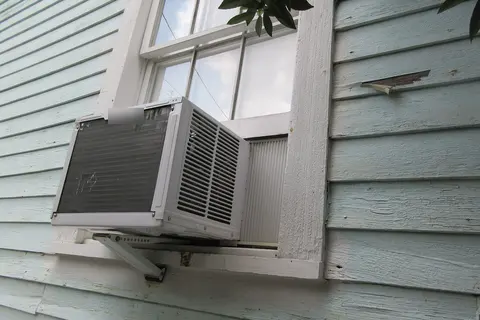
Side by side
| Compare | Window AC | Ductless heat pump |
|---|---|---|
| Heats too | No | Yes |
| Reach | One room | The main living area; closed rooms stay out of reach |
| PM2.5 filter | Typically lacks one, per EPA | Typically lacks one, per EPA |
| Smoke step | Close the outdoor damper, or don't run it | Add an air cleaner |
| Cold rating | Not relevant | Tested to 5F, per ENERGY STAR |
| Federal minimum | Compare CEER on the label | Split heat pump: 14.3 SEER2, 7.5 HSPF2 |
| Installer | Secured per its manual; someone qualified if the sash is doubtful | Contractor |
| Seattle permit | None named on the city's permit guide | Refrigeration permit for any split system |
| Rebate found | None | Several, for existing electric heat |
Sources: EPA: heat and smoke guide, EPA: wildfires and indoor air, ENERGY STAR: ductless, 10 CFR 430.32, Seattle SDCI: permit graphic. The table can't show your bids, or how your rooms connect, which decides how much of the house one head can reach.
What would change the answer
- Your heat isn't electric: most ductless rebates fall away, and a window unit gets more attractive.
- You spend most hours in one open living area: that favors one ductless head.
- The rooms you need cool are all bedrooms with doors kept shut: see one head or several.
- Your outdoor unit would sit in a narrow Seattle side yard: the noise rule may need a look.
- Your window can't hold a unit, so that option is out. If its damper won't close, EPA's line on not running it in smoke applies.
- You qualify for an income-based offer: compare it first, because it may change the sums.
What it costs, with dates
No official installed-price figure turned up for ductless systems, so none is printed here, and none for window units either. Ask at least two contractors for written bids that itemize heads, outdoor unit, line-set work, electrical circuit, permits and any rebate paperwork.
The table below is what you can set against a bid. These offers are as of November 2026 and nearly all assume electric heat today. A window unit doesn't qualify for any of them, and we found no rebate aimed at one.
Ductless rebates, as of November 2026
| Utility | Offer for ductless | Key condition |
|---|---|---|
| PSE (archived copy, May 2026) | $1,500; $2,400 income-based | Electric resistance heat now; PSE Trade Ally or REP |
| Tacoma Power | $1,000, up to 4 units; $650, 5 or more | Zonal or electric forced air; participating contractor |
| Clark Public Utilities | $900, single or multi-head | Electric furnace or zonal; licensed contractor |
| Snohomish PUD | No ductless amount on its page | Ask the PUD |
| Seattle City Light | No separate ductless figure shown | Ask the utility |
| Avista (archived copy, June 2026) | No heat pump amount on its page | Ask the utility |
PSE and Avista lines come from archived copies because their live sites were blocked where this was checked, so confirm with the utility before relying on them. Self-installs don't qualify where the pages say so. Check rebate or wait for income-based state money, and what heat costs for the running-cost working. On that page's 2024 statewide averages, not your utility's rate, a baseboard delivers heat at $34.87 per million Btu and a ductless heat pump at a Puget Sound metered COP from 2008-09 at $11.43.
Who does the work
The two jobs barely overlap. A window unit must be secured exactly as its manual says; if the sash or sill is doubtful, have someone qualified fit it. Keeping it clean is yours. A ductless system goes to a contractor, because refrigerant and line-set work need EPA-certified technicians and the electrical side needs a permit.
Verify the contractor on L&I's tool, then ask who pulls which permit, as the permit page explains. In Seattle, the city says you need a refrigeration permit for any split system. After install, your part is cleaning filters, clearing around the outdoor unit and checking a breaker.
How common are window units in Washington?
They are nearly as common as central AC. EIA's 2020 survey puts individual units in about 25% of Washington homes and central AC in about 30%. Overall, 53% of homes use air conditioning.
EIA's label is "individual units", so don't read that 25% as window units alone. It still shows how many houses here don't rely on central AC.
Will a ductless head help during wildfire smoke?
It helps with heat more than with smoke. EPA says mini-split and window units typically lack filters for PM2.5, so either way you add an air cleaner sized for the room. The sizing is on HEPA cleaner or MERV 13 filter.
The window unit has one extra step. EPA tells you to close the outdoor damper, and not to use the unit if you can't.
Is a ductless outdoor unit a noise problem in Seattle?
Usually a paperwork question, not a dealbreaker. Seattle's rule limits heat pumps to no more than 45 decibels at the property line. Side-yard equipment gets a noise review, though ductless doesn't unless there is a complaint.
Elsewhere, ask your local permit office. For how this fits your side of the state, start at the west side or east side page.
What people ask next
How much will a ductless heat pump use just for summer cooling in Washington?
Pilot homes metered in 2008-09 used 72 kWh a year in Puget Sound and 408 in the Inland Empire for cooling. At 14.63 cents per kWh that is about $11 and $60 by our arithmetic. Those years predate the 2021 heat dome, so treat them as a low marker.
Does adding a ductless head mean my baseboards can come out?
The metered pilot kept them. Heads went into main living zones without replacing the electric heat, and resistance heat kept running in other rooms. More on that is at ductless or baseboard.
Can I put in a mini-split myself and still claim a rebate?
Don't plan on it. Tacoma, Clark, PSE (archived copy, May 2026, so confirm with the utility) and City Light all exclude self-installs on their pages, and refrigerant work needs a certified technician.
Decide next
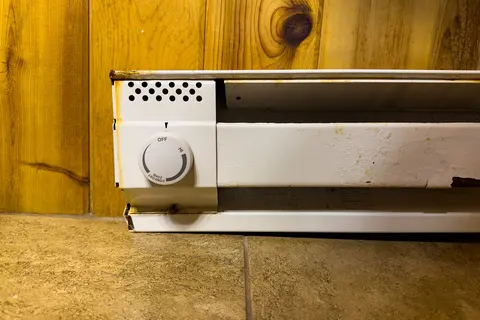
Ductless heat pump or keep the baseboard heaters?
- Ductless heat pump, baseboards stay
- West side electric homes with an open main living area
- Baseboards alone
- Small or lightly heated homes, or homes that lean on wood
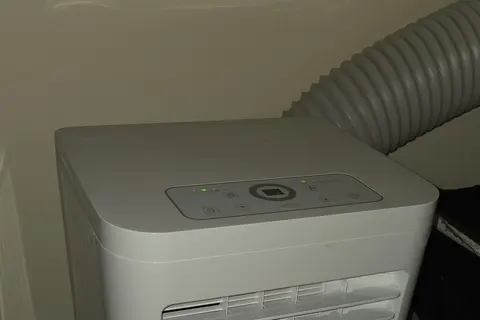
Portable AC or window AC for a Washington house?
- Portable AC
- Windows that can't hold a unit, ideally with a two-hose model
- Window AC
- Sashes that can hold a unit, on a model whose damper closes
Should you cool one room or the whole house?
- One cool room
- West side homes, no ducts, a modest budget, a room you can close
- Whole-house cooling
- East side summers, existing ducts, people home through the heat
Where this came from
- NEEA/Ecotope: ductless field metering report, checked November 3, 2026.
- ENERGY STAR: ductless heating and cooling, checked November 3, 2026.
- EPA: heat and smoke guide (PDF), checked November 3, 2026.
- EPA: wildfires and indoor air quality, checked November 3, 2026.
- EPA: Section 608 technician certification, checked November 3, 2026.
- EIA: RECS 2020, air conditioning by state (PDF), checked November 3, 2026.
- EIA: Electric Power Monthly Table 5.6.A, checked November 3, 2026.
- 10 CFR 430.32: federal minimums, checked November 3, 2026.
- Seattle SDCI: furnace and heat pump permit graphic (PDF), checked November 3, 2026.
- PSE: electric resistance to heat pump rebate (archived copy, May 2026), checked November 3, 2026.
- Avista: Washington single-family rebates (archived copy, June 2026), checked November 3, 2026.
- Tacoma Power: heat pumps, checked November 3, 2026.
- Clark Public Utilities: ductless heat pump program, checked November 3, 2026.
- Snohomish PUD: heating rebates, checked November 3, 2026.
- Seattle City Light: home energy solutions, checked November 3, 2026.
- L&I: verify a contractor, checked November 3, 2026.