Decisions Oil, propane and wood Both sides
Should an old heating oil tank be removed or closed in place?
Remove the tank or Close it in place
Compared by the people who run this site. Updated . Rebates and prices checked November 3, 2026.
Whether to remove or close an oil tank is a call for a certified decommissioner and your local fire marshal, and the work isn't yours to do. Most local rules require one or the other once a tank has been out of service a year or more, and suspected leakers are removed in Seattle.
The verdict, by situation
If you suspect the tank is leaking
Follow the leak steps first; removal is the likely end point. Stop automatic deliveries, have your dealer pump the tank, and report right away, within 24 hours. Seattle's rules say suspected leakers are removed rather than abandoned.
If the tank has sat unused for a year or more
Book a certified decommissioner now. Most local rules follow 2021 IFC 5704.2.13: removed or permanently closed in place (PLIA, archived copy, March 2025; confirm with PLIA and your fire marshal).
If you're switching from oil to a heat pump
Put the tank in the same plan. Have it pumped out and decommissioned as a separate line on the job, and see oil or heat pump for rebates. Low-income Seattle households may get tank decommissioning free.
If you're selling the house
Get the paperwork together early. Form 17 asks about fuel or chemical storage tanks and contaminated soil or water, so you'll want records whichever way it's closed.
If the tank is in use, with no signs of trouble
Neither yet. Keep the yearly check on your furnace, and plan the tank's end before you stop burning oil.
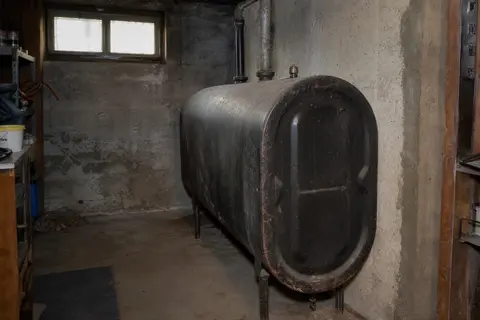
Side by side
| Compare | Remove | Close in place |
|---|---|---|
| Allowed under most fire codes | Yes | Yes |
| Suspected leak, Seattle | Required path | Not allowed |
| Who does it | Certified decommissioner | Certified decommissioner |
| Seattle permit | Code 6103, per tank, issued to the person doing the work | Same |
| Notice, statewide | Decommissioner files with Ecology within 30 days | Same |
| Notice, Seattle | Report to Seattle Fire within 30 days | Same |
| Tank stays on property | No | Yes |
| Home sale | Form 17 question still applies | Form 17 question still applies |
Sources under the table: Seattle Fire Department, PLIA on decommissioning (archived copy, March 2025), RCW 64.06.020. No source here compares removal and closure on cost or resale value, and local fire chiefs and marshals set their own rules. Ask yours which it prefers.
What would change the answer
- A confirmed leak or contaminated soil. That moves you from a tank decision to a cleanup.
- Your fire marshal's rules. Rules are local, so an answer that holds in Seattle may differ elsewhere.
- A buyer or lender's requirements. Sale terms may push you toward removal, even where closure is allowed.
- Being accepted into a Heating Oil Loan and Grant cycle. Work must be pre-approved, so a grant can change your timing.
- A 2027 version of Form 17. The Legislature's listing shows a version effective Jan. 1, 2027, so check which form applies when you sell.
What it costs, with dates
Don't expect a published price: no official source gives an installed or removal figure for a tank job. Ask for separate written lines covering pump-out, permit, decommissioning method, any soil sampling, disposal and the closure paperwork you'll keep.
The old state insurance is over. PLIA's transition notice says the policy expired June 30, 2025, with no new claims after July 31, 2025 (archived copy, July 2025; confirm with PLIA). PLIA also says most homeowner policies don't cover contamination on the source property (archived copy, May 2025). The replacement is the Heating Oil Loan and Grant program. As of November 2026, the latest amounts we can show come from older copies below, so confirm with PLIA before relying on them.
PLIA Heating Oil Loan and Grant program
| Item | Amount listed | Copy |
|---|---|---|
| Cleanup grant, cycles from May 2025 | Up to $60,000, no infrastructure upgrades | Archived copy, July 2025 |
| Upgrades, replacement, removal, cleanup | Up to $75,000 | Archived copy, March 2025 |
| Preliminary Planning Assessment grant | Up to $7,000 | Archived copy, March 2025 |
| TAP fee grant | $1,500 | Archived copy, March 2025 |
From PLIA's transition notice (archived copy, July 2025) and program page (archived copy, March 2025). The March 2025 copy predates the transition, so its amounts may have changed. Grants "aren't based on income and aren't required to be paid back." Cycles run in spring and fall and take up to 60 completed applications each, per the FAQ (archived copy, May 2025). Loans are underwritten, not guaranteed. The program's law expires July 1, 2030.
Who does the work
Only a certified decommissioner should decommission a tank, and only your oil dealer should pump one out. Don't pump, cut, fill or remove a tank yourself. Seattle requires an ICC-certified decommissioner, and its permit isn't issued to the property owner unless that person is one. Check any contractor on L&I's lookup and ask to see the decommissioner's certificate.
Your part is records and phone calls. Keep the permit, the closure notice and any test results in a folder for the next sale. Outside Seattle, start by asking your local fire chief or marshal what they require.
What should you do if the tank might be leaking?
Stop automatic deliveries and call your dealer to pump the tank, today. Treat an oil smell, oil dropping faster than it should, or a furnace that keeps stopping as reasons to call for help.
- Report it right away, within 24 hours. PLIA's reporting guide (archived copy, 2025) sends you to Ecology's regional contact or its ERTS form. Regional numbers on PLIA's leak page are 360-407-6300 for Southwest and 206-594-0000 for Northwest (archived copy, March 2025; confirm with PLIA). Elsewhere, including the East side, use the ERTS form or the regional contact the guide lists.
- For an emergency, or if water is affected, call Washington Emergency Management at 1-800-258-5990.
- In Seattle, the city's flyer says to report within 24 hours to 1-800-OILS-911.
- Call PLIA about the loan and grant program, and hire certified professionals for the cleanup.
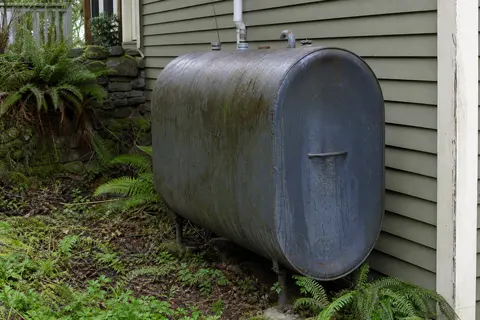
Who regulates a home heating oil tank in Washington?
Mostly your local fire authority, with PLIA as the state's point of contact. Ecology's page is blunt: "Ecology does not regulate home heating oil tanks. Please contact the Pollution Liability Insurance Agency for assistance." Even so, the leak guide routes reports through Ecology, and decommissioners file closure notices there. That's why the steps above still include it.
In Seattle, the 2021 Seattle Fire Code sets it out: 5704.2.13 requires decommissioning after a year out of service, and 105.5.20 requires a permit. Other decisions on the house start from the starting page or the oil house page.
Does state insurance still pay if I find a leak on my old policy?
Not for new claims. Existing claims stay valid until closed or exhausted, but the program stopped taking new ones after July 31, 2025, by PLIA's notice (archived copy, July 2025; confirm with PLIA).
Watch for stale wording at closing. The disclosure notice in RCW 64.06.090 still says "no cost insurance may be available from the pollution liability insurance agency," even though the insurance has ended. PLIA's status line says it has completed the move into the loan and grant program (archived copy, October 2026; confirm with PLIA).
What people ask next
Do I need to register with PLIA to apply for a grant?
PLIA's notice says "You don't need to register." That's from an archived copy, July 2025, so confirm with PLIA.
Can a Seattle homeowner pull the oil tank decommissioning permit?
Only if that homeowner is a certified decommissioner. The Seattle Fire Department says the permit is issued to the person doing the work.
Is 90 days the deadline for reporting a heating oil leak?
Don't rely on it. Ecology's general spill page mentions 90 days for oil spilled to ground, but PLIA and Seattle both say to report within 24 hours. Use right away, within 24 hours.
Decide next
Stay on heating oil, or switch to a heat pump?
- Stay on oil for now
- A sound newer furnace and no tank trouble
- Switch to a heat pump
- Seattle homes eligible for Clean Heat, and homes with worn oil furnaces
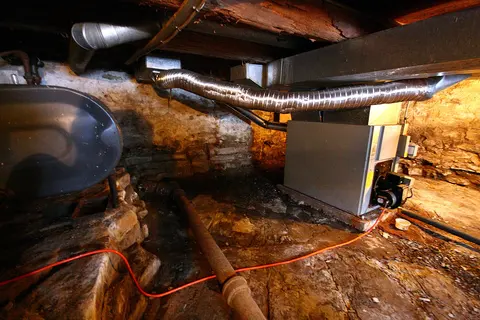
Who pulls the permit: your contractor or you?
- Contractor pulls it
- Heat pump, AC, gas, oil tank and any contractor-wired job
- You pull it
- Rare: only work you are lawfully doing yourself
Take a rebate now or wait for better money?
- Take what is open now
- Anyone with a failing system or a utility offer that fits
- Wait for HARP and HOMES
- A working system, income under 150% AMI, and no deadline
Where this came from
- Seattle Fire Department: decommissioning oil tanks, checked November 3, 2026.
- City of Seattle: oil tank flyer, checked November 3, 2026.
- City of Seattle: Clean Heat program, checked November 3, 2026.
- PLIA: home page (archived copy, October 2026), checked November 3, 2026.
- PLIA: insurance program transition (archived copy, July 2025), checked November 3, 2026.
- PLIA: Heating Oil Loan and Grant program (archived copy, March 2025), checked November 3, 2026.
- PLIA: HOLG FAQ (archived copy, May 2025), checked November 3, 2026.
- PLIA: heating oil tank decommissioning (archived copy, March 2025), checked November 3, 2026.
- PLIA: heating oil tank leaks (archived copy, March 2025), checked November 3, 2026.
- PLIA: guide to reporting heating oil releases (archived copy, 2025), checked November 3, 2026.
- Washington Ecology: residential cleanup situations, checked November 3, 2026.
- Washington Ecology: if you spill, checked November 3, 2026.
- Washington Legislature: RCW 64.06.020, checked November 3, 2026.
- Washington Legislature: RCW 64.06.090, checked November 3, 2026.
- Washington Legislature: chapter 70A.330 RCW, checked November 3, 2026.
- L&I: verify a contractor, checked November 3, 2026.