Decisions Money and rules Both sides
Gas or electric heat for a new Washington house?
Heat pump or Heat pump with gas back-up or Gas furnace
Compared by the people who run this site. Updated . Rebates and prices checked November 3, 2026.
Gas or electric heat in a new Washington house leans electric on code math: a heat pump earns 3.0 energy credits and a gas furnace at federal minimum earns 0. The current code text we checked does not flatly require a heat pump, and gas remains an option to confirm locally.
The verdict, by situation
If you are building on the west side and just want the plan to pass cleanly
Heat pump. Its 3.0 credits cover more of the total a medium house needs, and it also cools.
If you are building on the east side with gas at the lot
Price the heat pump and the back-up version. Spokane averages 2.2 days a year with a low of 0F or below, and a heat pump with a supplement earns 1.5 credits.
If there is no gas main at the lot
Heat pump. EIA's 2024 Washington price for HGL, a blend that includes propane, was $26.30 per million Btu, more than double natural gas at $11.65.
If gas is a firm preference and your builder can find credits elsewhere
Gas furnace, with the utility's service commitment in writing. Confirm the local rules too, since nothing we found settles them.
If you were counting on I-2066 to protect gas service
Don't plan around it. The Washington Supreme Court struck it down in full on Sept. 17, 2026 (the court's opinion, news-site copy).
If your permit application will land near May 3, 2027
Ask which code edition applies. The 2024 code is due that day, but it is not final.
Side by side
| Compare | Heat pump | Heat pump with gas back-up | Gas furnace |
|---|---|---|---|
| Space-heating credits, Table R406.2 | 3.0 | 1.5 | 0 at federal minimum |
| Left to find, medium house needing 8.0 (our arithmetic) | 5.0 | 6.5 | 8.0 |
| Federal minimum | 14.3 SEER2, 7.5 HSPF2 (split) | Both minimums apply | 80% AFUE; 95% if made on or after Dec. 18, 2028 |
| Cold-weather note | Tested to 5F for cold-climate models; back-up below that is normal | Gas takes the coldest hours | Not affected by outdoor cold |
| Cooling | Built in | Built in | Needs a separate AC |
| Carbon monoxide | No heating flame in the house | Yearly check by a trained professional | Yearly check by a trained professional |
| Utility rebates | PSE and Tacoma exclude new construction | Same | None found |
Sources under the table: 2021 energy code, 10 CFR 430.32, ENERGY STAR heat pump criteria, Washington DOH on carbon monoxide, PSE (archived copy, May 2026), Tacoma Power. Confirm PSE's line with the utility. The 3.0 line is for a heat pump; one with an electric resistance or combustion supplement earns 1.5, so ask the designer which line your system falls under. Required totals are 5.0 for a small unit and 9.0 for a large one.
What would change the answer
- Final 2024 code language adds or changes gas rules. Proposals so far include electric readiness when an appliance burns gas or liquid fuel. That is not law.
- Your gas utility won't commit to service at the lot.
- A local jurisdiction has its own rule. We found nothing settled on local gas limits.
- Winter gas prices stay near recent levels. EIA's annual Washington price went from $12.72 in 2024 to $17.62 in 2025 per thousand cubic feet.
- The house is over 5,000 sq ft. It needs 9.0 credits, so the math gets tighter.
- The house is an addition of 150 to 500 sq ft. Those need 2.0 credits, and a different plan may work.
What it costs, with dates
Fuel is where we can give numbers, and they are our arithmetic on 2024 state averages. Delivered heat from a 95% gas furnace came to $12.26 per million Btu, against $11.43 for a ductless heat pump at a Puget Sound metered COP of 3.05, as of November 2026.
Read that with care. These are statewide averages, not your utility. The heat pump figure comes from pilot homes metered in 2008-09. AFUE is a rating, not a meter reading, and duct losses are left out. EIA's annual gas price also jumped about 39% from 2024 to 2025, which would lift the 95% gas row to about $17.0.
We found no official installed-price figure, for either fuel. Ask the builder's written bid to itemize the equipment, the gas line or electrical service, ducts, and the energy credit plan with each option's point total.
Who does the work
Your builder and the plan designer choose the credit package, and the local building office accepts it. Check registrations on L&I's tool. Ask for the Manual S and Manual J sizing and the signed duct leak report under WSU RS-33, since code calls for both. Who pulls the permit covers the mechanical and electrical side. Once you live there, filters and clearing around the outdoor unit are your part. Everything with gas, refrigerant or wiring stays with licensed trades.
What does the end of I-2066 actually change?
It means the initiative is not law. In the court's opinion (news-site copy), the court held that it violates the single-subject rule and "is unconstitutional in its entirety." Ballotpedia News reports a 6-3 vote.
Gas service itself did not end, and nothing we found says existing customers lose it. We won't predict what comes next. Here is what remains unconfirmed:
- We could not open the court's own site, so the opinion comes from a copy on a news site, not checked against the court's copy.
- We found no statement on its effects from the UTC, the Attorney General, Commerce or the Secretary of State.
- We don't know whether reconsideration was sought.
- We found no State Building Code Council action tied to I-2066.
- Local gas limits, PSE service changes and code effects are not settled by anything we found.

Which energy code applies to a house started now?
The 2021 residential energy code, effective March 15, 2024, is the current one. Its climate table puts King, Pierce, Snohomish and Clark in zone 4C, and Spokane, Yakima and Benton in 5B.
The 2024 code has a May 3, 2027 effective date on the council's site. Its schedule shows a final adoption meeting on Nov. 20, 2026, and WSU warns that "all dates, filings, and final code language remain subject to change." Ask your building office which edition your application falls under, and start at the west side or east side page for climate differences.
What changes if the house has gas?
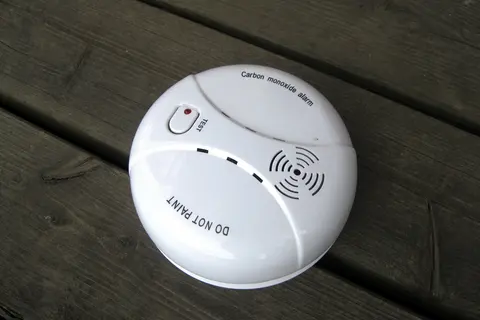
You add a fuel and its safety rules. Washington's health department wants gas appliances checked yearly by a trained professional. If a CO alarm sounds, get everyone out first and call 911 from outside.
If you smell gas, leave first. Don't touch switches or plugs, and don't use a phone inside. From outside and away, call 911 and your gas utility: PSE 1-888-225-5773 (archived copy, September 2026), Cascade 888-522-1130 (archived copy, December 2025), Avista 800-227-9187 (archived copy, October 2025), or NW Natural 800-882-3377. Confirm with the utility and keep the right number handy. Links: PSE (archived copy, September 2026), Cascade (archived copy, December 2025), Avista (archived copy, October 2025).
What people ask next
Does Washington ban gas in new houses?
Not in the text we checked. The 2021 code printing has no sentence saying heat "shall be provided by a heat pump." It gives a combustion system at federal minimums 0 credits.
When can a new heat pump's electric back-up run under Washington code?
Washington's code requires controls that stop supplementary heaters above 40F, with a thermostat exception for ductless units with an integral thermostat.
Would a baseboard-only new house earn credits?
Yes, but few. Electric resistance alone earns 0.5, and resistance with ductless in the largest zone earns 2.0, per the same table.
Decide next
Dual fuel or all electric: which heat pump setup fits your house?
- Dual fuel (heat pump plus furnace)
- Houses with a gas furnace that is still relatively new
- All electric (heat pump plus electric back-up)
- Houses with no gas, or a furnace at the end of its life
Who pulls the permit: your contractor or you?
- Contractor pulls it
- Heat pump, AC, gas, oil tank and any contractor-wired job
- You pull it
- Rare: only work you are lawfully doing yourself
New gas furnace or heat pump on the West side?
- New gas furnace
- Furnace has failed, cooling isn't wanted, and budget is tight
- Heat pump
- Cooling matters, or an income-qualified PSE gas rebate is on the table
Where this came from
- State Building Code Council: Energy code, checked November 3, 2026.
- State Building Code Council: 2021 residential energy code text, checked November 3, 2026.
- State Building Code Council: Home page, 2024 code date, checked November 3, 2026.
- State Building Code Council: 2024 code adoption schedule, checked November 3, 2026.
- WSU Energy Program: 2024 code forms and resources, checked November 3, 2026.
- Washington State Register: WSR 26-14-101, checked November 3, 2026.
- Washington Supreme Court: Climate Solutions v. State, No. 104240-0 (news-site copy), checked November 3, 2026.
- Ballotpedia News: Washington Supreme Court overturns natural gas initiative, checked November 3, 2026.
- Washington Legislature: WAC 51-11R-40310, checked November 3, 2026.
- Cornell LII: 10 CFR 430.32, checked November 3, 2026.
- ENERGY STAR: Air-source heat pump criteria, checked November 3, 2026.
- NOAA: Spokane annual normals, 1991-2020, checked November 3, 2026.
- EIA: Washington state energy prices (SEDS), checked November 3, 2026.
- EIA: Natural gas prices, annual, checked November 3, 2026.
- Washington DOH: Carbon monoxide, checked November 3, 2026.
- PSE: Electric resistance to heat pump rebate (archived copy, May 2026), checked November 3, 2026.
- Tacoma Power: Heat pumps, checked November 3, 2026.
- PSE: Detect a leak (archived copy, September 2026), checked November 3, 2026.
- Cascade Natural Gas: Emergency information (archived copy, December 2025), checked November 3, 2026.
- Avista: Natural gas safety (archived copy, October 2025), checked November 3, 2026.
- NW Natural: If you smell natural gas, checked November 3, 2026.
- L&I: Verify a contractor, checked November 3, 2026.