Decisions Cooling Both sides
Portable AC or window AC for a Washington house?
Portable AC or Window AC
Compared by the people who run this site. Updated . Rebates and prices checked November 3, 2026.
Portable AC or window AC: pick the window unit if the sash can hold one and its outdoor damper closes, because EPA's smoke advice for that setup is the simpler one. Pick a portable when the window can't take a unit, and look for two hoses. We found no source that compares their efficiency, so this page doesn't claim either wins on power use.
The verdict, by situation
If your window can hold a unit and the model has an outdoor damper that closes
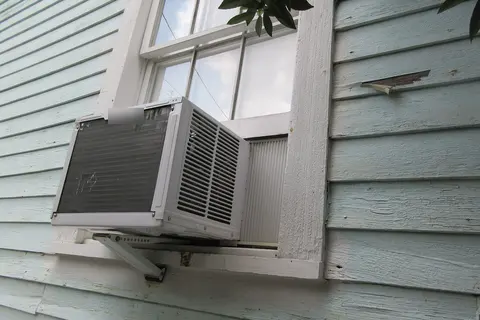
Window AC. On smoke days EPA's instruction for this setup is one step: close the outdoor damper.
If a window unit would fit but its damper won't close, and your summers bring smoke
Window AC on clear days only, with another plan for smoke. EPA is direct: "If you cannot close the damper, do not use the window air conditioner."
If the sash, the window type or a lease rules out a window unit
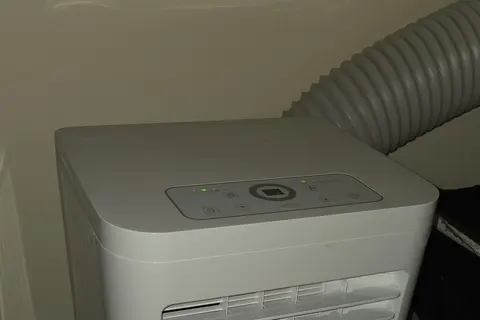
Portable AC, two-hose if you can find one. EPA's advice asks only for a tight seal on a two-hose model, and warns that a single-hose model can bring more smoke in.
If you already own a single-hose portable
Keep it and use it sparingly in smoke. That is EPA's wording for that machine, and it does not stop you running it on clear days.
If you are cooling one heavily shaded bedroom
Either; size a window unit down, and follow the maker's label on a portable. ENERGY STAR says to reduce capacity 10% for a heavily shaded room, and warns an oversized unit leaves the room damp and clammy.
If you also want heat from the same purchase
Neither. Neither one is a heating plan, so read window AC against a ductless heat pump before you buy.
Side by side
| Compare | Portable AC | Window AC |
|---|---|---|
| Where it sits | On the floor, hose to a window | In the window sash |
| EPA smoke advice | Single-hose: use sparingly. Two-hose: tight seal | Close the outdoor damper. No damper, don't use it in smoke |
| PM2.5 filter | No statement found | Typically lacks one, per EPA; add an air cleaner |
| Federal standard | CEER, single- and dual-duct units made on or after Jan. 10, 2025 | CEER is on the ENERGY STAR label; compare units |
| Efficiency against each other | We found no official comparison | We found no official comparison |
| Sizing guidance | None specific to portables; use the maker's label | ENERGY STAR, by square feet at an 8-foot ceiling |
| Permit signal | Tacoma's exempt list covers portable units | Ask your local office if unsure |
| Rebate found | None | None |
Sources: EPA: wildfires and indoor air, EPA: heat and smoke guide, 10 CFR 430.32, ENERGY STAR: room air conditioners, City of Tacoma: residential permits. The table can't show which uses less power in your room. We looked for a federal comparison of portable and room units and could not confirm one.
What would change the answer
- The sash won't carry the weight of a unit, or won't close against it: that moves you to a portable.
- The window model you like has no damper you can close, and smoke days matter to your household.
- More than two people use the room regularly: ENERGY STAR adds 600 BTU per person over two.
- The only portable you can get is single-hose and you need it through a smoke event: a window unit with a working damper becomes the stronger choice.
- You rent and can't alter the window: a portable may be the only option left.
- You want one machine for summer and winter: leave this page for ductless.
What it costs, with dates
Neither type comes with an official price we could find, so no purchase or installed figure appears here. Compare listings on equal capacity.
Running cost is a sum you can do from the label. Washington residential electricity averaged 14.63 cents per kWh in August 2026, and Seattle City Light's flat rate is 13.38 cents plus a daily base charge. Take the watts on the label, divide by 1,000, multiply by hours and by your rate. As our own example, not a measured figure, 1,000 watts for 8 hours is 8 kWh, about $1.17 at 14.63 cents.
We found no rebate aimed at portable or window units on the utility heat pump and weatherization pages checked for this site, as of November 2026. Confirm with your utility. If you end up hiring an electrician, get the bid in writing and have it itemize the circuit work and the permit.
Who does the work
A portable needs no installer. A window unit must be secured exactly as its manual says; if the sash or sill is doubtful, have someone qualified fit it or choose a portable. Your part after that is clean filters, clear airflow around the unit, and checking a breaker if the unit goes dead.
If a breaker trips repeatedly, stop there and call an electrician. L&I says you must purchase a permit before starting any electrical work, and you can verify any contractor on L&I's tool. See who pulls the permit.
Don't open either unit. EPA requires certified technicians for equipment that could release refrigerant, so a unit that has lost its cooling goes to a shop or gets replaced.
Does the number of hoses matter in smoke season?
Yes, at least in EPA's advice. EPA separates the two: a single-hose portable should be used sparingly because it can bring more smoke in, and a two-hose unit should have a tight seal.
That matters here because Washington DOH says smoke season typically starts in July or August and can begin as early as May.
Neither machine should be treated as your smoke filter. EPA notes that window units typically lack filters for PM2.5 and says to add an air cleaner. Its guidance on that point doesn't mention portables, so plan on the same. The sizing is on HEPA cleaner or MERV 13 filter.
How do you size a room unit without guessing?
Start from the room's square footage and adjust. ENERGY STAR's sizing assumes an 8-foot ceiling, takes off 10% for a heavily shaded room, and adds 600 BTU per person over two.
Bigger is not safer. The same page warns that an oversized unit leaves the room damp and clammy. For a portable, we found no equal guidance, so go by the maker's label and don't assume the two match.
Is one of these enough for the next heat dome?
It can cool a room, with no guarantee. Sea-Tac reached 108F on June 28, 2021, and Yakima's record of 113 came the next day. A unit that keeps up on a normal day may fall short then.
Have a fallback. EPA says to consider shelter elsewhere if you can't stay cool at home, the power goes out or too much smoke is getting in. In Washington, dial 2-1-1 for cooling centers. For the rest of the plan, see the no-AC house, or the west side and east side overviews.
What people ask next
Does a portable AC built before January 2025 meet the current federal standard?
The portable CEER standard applies to single-duct and dual-duct units made on or after January 10, 2025. A unit made earlier wasn't built to that date's rule, so check the manufacture date on the label.
Is there official guidance on fitting a window unit into an old wood sash?
We found none in the agency pages checked for this site, including on window safety. Follow the maker's manual, and if the sash is loose or the unit won't sit securely, treat that as a reason to choose a portable.
Can I still run a single-hose portable during a smoke advisory?
EPA doesn't rule it out. Its wording is to use it sparingly because it can bring more smoke in. If it is the only thing keeping a room safe, go by what the room temperature and the air tell you, and leave if you can't stay cool.
Decide next
Window AC or a ductless heat pump for your house?
- Window AC
- One or two rooms, a small budget, cooling only
- Ductless heat pump
- Electric heat you also want to cut, a long stay
Are fans enough, or does your Washington house need AC?
- Fans
- Mild days when the indoor reading stays within the agency lines
- Air conditioning
- Any home planning for a heat wave, or for people at home all day
HEPA air cleaner or MERV 13 filter for wildfire smoke?
- HEPA room cleaner
- Homes without ducts, and one clean room in any home
- MERV 13 furnace filter
- Homes with ducted forced air and a slot that fits
Where this came from
- EPA: wildfires and indoor air quality, checked November 3, 2026.
- EPA: heat and smoke guide (PDF), checked November 3, 2026.
- EPA: create a clean room, checked November 3, 2026.
- EPA: Section 608 technician certification, checked November 3, 2026.
- ENERGY STAR: room air conditioners, checked November 3, 2026.
- 10 CFR 430.32: portable AC standard, checked November 3, 2026.
- EIA: Electric Power Monthly Table 5.6.A, checked November 3, 2026.
- Seattle City Light: rates, checked November 3, 2026.
- City of Tacoma: residential permits, checked November 3, 2026.
- L&I: electrical permits, fees and inspections, checked November 3, 2026.
- L&I: verify a contractor, checked November 3, 2026.
- Washington DOH: protect yourself from smoke, checked November 3, 2026.
- Washington DOH: extreme heat, checked November 3, 2026.
- NWS: Seattle climate data (NOWData), Sea-Tac daily highs, checked November 3, 2026.
- NWS: Yakima annual climate report, checked November 3, 2026.