Decisions Damp, crawlspaces and ducts Both sides
Should you seal your ducts or replace them?
Seal and insulate or Replace the runs
Compared by the people who run this site. Updated . Rebates and prices checked November 3, 2026.
Whether to seal or replace ducts comes down to their condition: whole ducts that leak should be sealed and then insulated, and torn, crushed or disconnected runs need a replacement price. No official rule draws that line, so ask for a leakage test before you pay for either.
The verdict, by situation
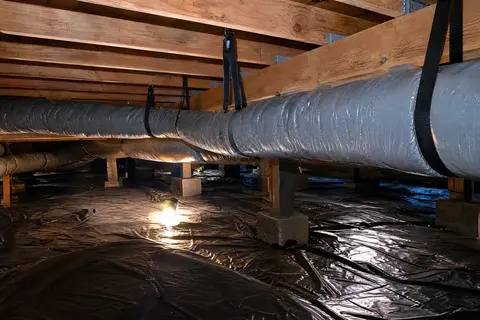
If your ducts run through a crawl space or attic and look whole from the hatch
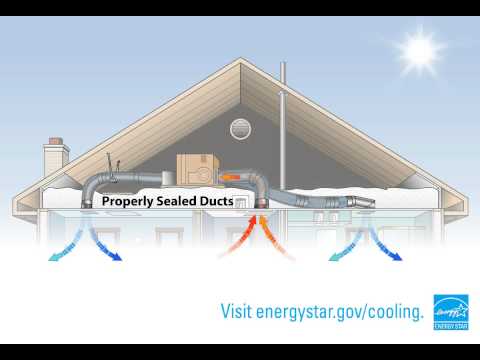
Seal, then insulate. ENERGY STAR says about 20 to 30 percent of the air moving through a duct system is lost to leaks, holes and poor connections.
If a section hangs loose, has collapsed or has come apart
Replace that run, and seal the rest. A patch can't restore a crushed duct, and the contractor can price the two jobs separately.
If old ducts or furnace parts are wrapped in material you can't identify
Leave it alone and call a professional. EPA says asbestos exposure generally comes when material is disturbed.
If you are adding a heat pump to existing ducts
Test and size before you decide. Ask for Manual J and a duct check in the bid, then compare with ductless.
If some rooms are cold and the filter is clogged
Neither yet. Change the filter, which ENERGY STAR says to do at least every 3 months, and see what remains.
If your house has baseboards and no ducts
Neither. Start at the baseboard house page, since there is nothing to seal.
Side by side
| Compare | Seal and insulate | Replace the runs |
|---|---|---|
| What gets done | Joints sealed with mastic or metal tape, then insulation | New duct sections, then the same sealing and insulation |
| Official savings line | "By as much as 20 percent" for sealing and insulating (ENERGY STAR) | No separate official figure found |
| Utility rebates | Lines at PSE, Snohomish and Clark, shown below | No replacement line found |
| Insulation outside the heated space | R-8 at 3 inches and larger, R-6 smaller | Same code numbers |
| Leak testing | Ask for before and after numbers | New-house code limit is 4 cfm per 100 sq ft; a proposed 12 cfm limit on altered ducts is not law |
| Permit | Ask your local office | Exempt from mechanical permit in unincorporated King County, other permits may apply |
| Old wrap | Do not disturb; professional first | Do not disturb; professional first |
Sources under the table: ENERGY STAR duct sealing, ENERGY STAR heating and cooling, Washington duct insulation rule, 2021 energy code, proposed 2024 code. The table can't see your ducts. A test number from your house beats every general percentage here.
What would change the answer
- A leakage test shows little loss. Then look at air sealing and insulation instead.
- The rebate requires a contractor you were not planning to use. Sealing through a network contractor may then cost you less than a cheaper bid outside it.
- The new system needs more air than the old ducts can carry. That turns a sealing job into a design job.
- A professional identifies the old wrap. That answer changes who does the work and how.
- The ducts run through a crawl you also plan to change. Decide vented or sealed first, so the two jobs fit together.
What it costs, with dates
Rebates are the firm numbers here, as of November 2026, and all require the utility's own contractors and conditions. We found no official installed-price figure for duct sealing or duct replacement. Ask for written bids that itemize feet of duct, joints sealed, the material named (mastic or metal tape), insulation R-value, and before and after leakage numbers.
Duct rebates by utility
| Utility | Offer | Conditions |
|---|---|---|
| PSE | Sealing only up to $550; sealing and insulation up to $1,000; advanced sealing up to $1,250 (archived copy, April 2026), confirm with the utility | Instant, through a REP or Trade Ally; PSE electric or gas as primary heat |
| Snohomish PUD | $5 per linear foot up to $450, single-family; single-wide $200; double or triple-wide $400 | Electrically heated, registered contractor |
| Clark Public Utilities | Sealing "$200 or $500"; duct insulation $0.60 per linear foot | Contractor Network, electric heat |
Sources: PSE insulation rebates (archived copy, April 2026), Snohomish PUD, Clark. Tacoma's weatherization amounts could not be confirmed. Avista's page shows a Home Insulation Program with no duct figure (archived copy, June 2026), so confirm with the utility. See also your utility's page.
Who does the work
A registered HVAC or weatherization contractor does this work, and L&I's tool shows whether registration and workers' comp are active. New-house code calls for a leak test under WSU RS-33 with a written, signed report; asking for the same kind of report on an existing house is fair. Keep your own share simple: change the filter, look from the hatch with a flashlight, take photos. Don't go in, and don't touch old wrap.
Why not just use duct tape?
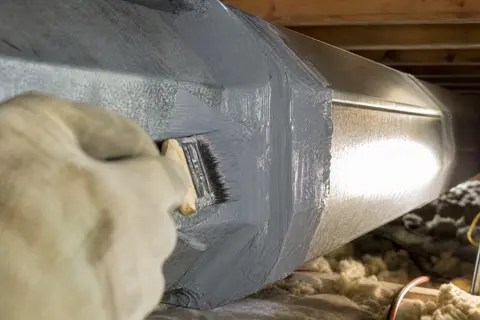
Because ENERGY STAR says, in those words, "Never use duct tape." It names mastic or metal tape instead.
Read the bid for those words. If a proposal says only "sealed," ask what with, and which joints.
Which ducts should get attention first?
Start with ducts in unheated space. ENERGY STAR says to focus first on the attic, crawl space, unheated basement and garage.
Air lost there heats or cools nothing you use, and leaky ducts can pull particles from attics and crawl spaces into the house. That holds on both sides of the Cascades.
Could old duct wrap contain asbestos?
We can't say from the outside, and neither can you. EPA's page lists oil and coal furnaces and door gaskets with asbestos insulation; it does not name duct wrap in the text we saw.
So treat unknown old material as a reason to stop. Don't cut, brush, seal over or remove it until a professional has looked. This is the one case where the first bid should come from someone who can identify the material.
Parts and examples
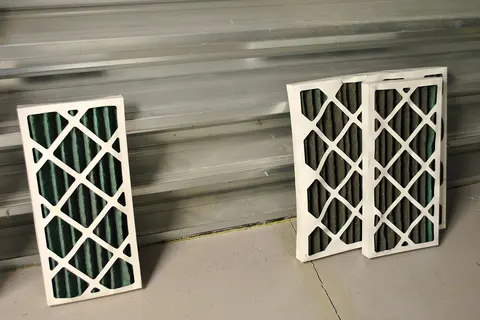
To learn what bids are naming, Plumbing Supply and More, which shares an owner with this site, has pages on flexible duct and tapes. These are the parts a contractor installs, listed here for comparing. Whatever tape you see, ENERGY STAR's rule stands: mastic or metal tape, never duct tape.
What people ask next
Do I need a permit to replace ducts in unincorporated King County?
The county's sheet lists duct work replacement in single-family homes as exempt from the mechanical permit, though other permits may apply. Cities have their own offices; see who pulls the permit.
Will Washington's next code require testing when ducts are altered?
It is proposed, not law. The 2024 proposal lists altered ductwork tested to a 12 cfm per 100 sq ft limit, and the code's final language is not settled.
Does installing new equipment fix leaky ducts?
No. ENERGY STAR says air leaks and ducts are sometimes the real source of problems rather than the equipment, so check them before a repair or replace call.
Decide next
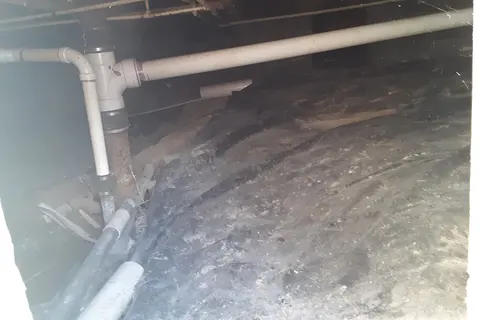
Should a Washington crawlspace stay vented or be sealed?
- Stay vented, finish the ground cover
- Most existing houses with clear vents and no standing water
- Seal it (unvented)
- A designed project that meets the radon and exhaust rules
Should you insulate first or replace the equipment first?
- Insulate and seal first
- A working system in a house with a thin attic or leaks
- Equipment first
- A failed system, or a baseboard house already well insulated
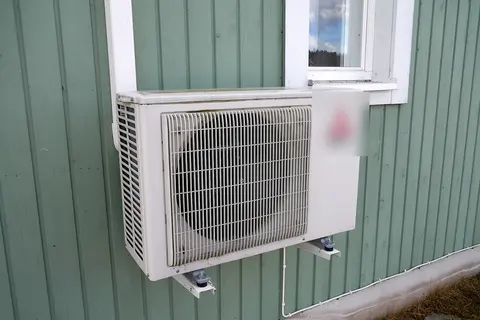
Ductless or ducted heat pump for this house?
- Ductless
- No ducts, or ducts in poor shape, with baseboards to cover far rooms
- Ducted
- Sound ducts already reaching every room, often from an old furnace
Where this came from
- ENERGY STAR: Duct sealing, checked November 3, 2026.
- ENERGY STAR: Heating and cooling, checked November 3, 2026.
- ENERGY STAR: When to replace, checked November 3, 2026.
- EPA: Learn about asbestos, checked November 3, 2026.
- U.S. DOE: Home heating and cooling guide, checked November 3, 2026.
- Washington Legislature: WAC 51-11R-40320, checked November 3, 2026.
- State Building Code Council: 2021 residential energy code, checked November 3, 2026.
- Washington State Register: WSR 26-14-101, proposed 2024 code, checked November 3, 2026.
- King County: Residential mechanical permits, checked November 3, 2026.
- PSE: Insulation rebates (archived copy, April 2026), checked November 3, 2026.
- Avista: Single-family rebates (archived copy, June 2026), checked November 3, 2026.
- Snohomish County PUD: Weatherization rebates, checked November 3, 2026.
- Clark Public Utilities: Weatherization program, checked November 3, 2026.
- L&I: Verify a contractor, checked November 3, 2026.