Decisions Heat, west side West side
Space heater or another ductless head for the cold back room?
Space heater or Wall baseboard or Another head
Compared by the people who run this site. Updated . Rebates and prices checked November 3, 2026.
Choosing a space heater or another ductless head depends on the hours. For an hour or two with someone awake in the room, a heater is enough. For a bedroom used every night, it's the wrong tool. USFA says to turn heaters off when you go to bed.
The verdict, by situation
If your ductless head leaves one back room cold and the room has a baseboard
Use the baseboard first. It's already wired in and costs the same per unit of heat as a plug-in heater. Compare the rooms on one head or several.
If the cold room is a bedroom you sleep in all winter, with no baseboard
Price another head or a hard-wired heater. USFA's rule is off when leaving the room or going to bed, which rules out overnight use.
If it's a home office you use a few hours on the coldest days
A space heater is reasonable. Keep it three feet from anything that can burn and plug it directly into a wall outlet, as CPSC says.
If you're thinking of the oven or range for a cold night
Don't. DOH says never use a gas range or gas oven to heat your home.

Side by side
| Compare | Space heater | Wall baseboard | Another head |
|---|---|---|---|
| Heat per unit of electricity | 1 unit, plain physics | 1 unit, plain physics | COP 3.05, Puget Sound, metered 2008-09 |
| Heat cost, our arithmetic | $34.87 per million Btu | $34.87 per million Btu | $11.43 per million Btu |
| Overnight use | No, per USFA | Runs on its thermostat | Yes |
| Install | Plug in | Already there, or an electrician | Contractor, permits |
| Refrigerant work | None | None | Certified technicians only |
| Cooling | None | None | Yes |
Sources: NEEA field metering, EIA prices, USFA. The cost row is our division on 2024 statewide averages, not your utility's rate, and pilot homes were metered in 2008-09. The running-cost page has the caveats. No source measured a second head in a back room, so its row is borrowed from main-zone metering.
What would change the answer
- The room gets used nightly by someone who sleeps there. The heater stops being an option under the USFA rule.
- The door can stay open. Heat from the first head can then move to the adjacent room, as the NEEA pilot saw when occupants raised the setting.
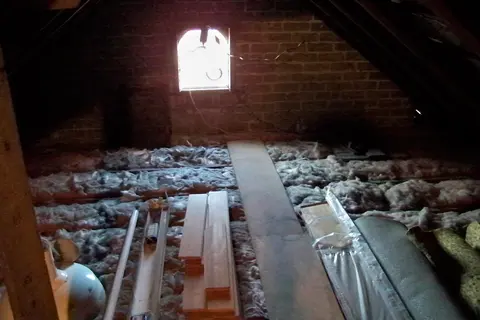
- The room is simply leaky. ENERGY STAR says fixing air leaks can matter more than equipment, so read insulate first or equipment first.
- Your contractor says the outdoor unit can't take another head. The comparison then includes a second outdoor unit, so have it priced that way.
- You have central ducts. Then the back-room problem may belong on ductless or ducted instead.
What it costs, with dates
A plug-in heater's running cost is simple arithmetic. A heater drawing 1,000 watts for five evening hours uses 5 kWh. At the state's average of 14.63 cents per kWh in August 2026, that's about 73 cents by our arithmetic. Seattle's flat rate is $0.1338 per kWh plus a daily base charge. Check your bill for your own rate.
Don't count on a rebate for a second head, as of November 2026. Tacoma Power lists homes with an existing ductless heat pump as "Not available". PSE's conversion rebate excludes existing heat pump customers (archived copy, May 2026), so confirm with the utility. We found no official installed-price figure for an added head, so ask for a written bid that lists the head, line-set run, electrical work and permits.
Who does the work
There are two very different hiring questions here. A plug-in heater needs nobody, though a breaker that keeps tripping is a reason to stop using it there and call an electrician. An added head needs a registered contractor you've checked on the L&I tool, since refrigerant and line sets are certified technician work. You can keep the space around any heater clear and wash the head's filter.
What do the fire agencies actually say about space heaters?
They say three things, and each one matters. CPSC says to keep them at least three feet from anything that can burn, and to always plug electric ones directly into a wall outlet. USFA says to turn them off when leaving the room or going to bed.
USFA counts 32,200 home heating fires in 2021. That's every type of home heating, not space heaters alone, but it's why the rules are so plain.
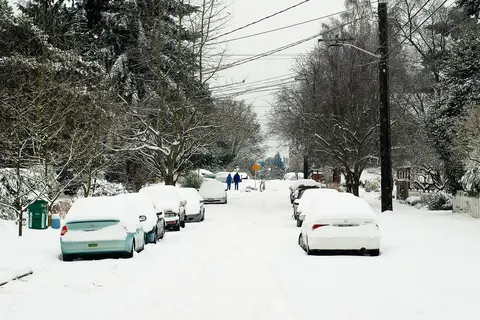
Why do so many ductless homes end up with a plug-in heater anyway?
Because back rooms are hard to reach. BPA's study of electric forced-air homes found that many occupants used a 120-volt heater in a back room, and it says the ductless unit doesn't heat those rooms as effectively as a ducted system.
The NEEA pilot's metered numbers also left plug-in 110V heaters out. So if you run one all winter, the savings you read about on the baseboard comparison don't include it. Your whole picture is on the baseboard house guide and the West side list.
What people ask next
Can I leave a space heater running in a child's room overnight?
No. USFA says to turn space heaters off when going to bed. Use the room's baseboard, or plan for a wired heat source.
Is an oil-filled heater cheaper to run than a fan heater?
We found no official comparison. Both turn electricity into heat at one unit per unit, so the cost depends on the hours and the room.
Does a plug-in heater reduce what a ductless head saves?
It adds its own kWh, and pilot figures don't include it. The same room on a head would use less power per unit of heat, going by the metered COP of 3.05 in Puget Sound.
Decide next
One ductless head or one in each problem room?
- One head
- Open plan, short hallway, and baseboards kept for the far rooms
- Several heads
- Closed-off rooms that stay cold or that you heat with plugged-in heaters
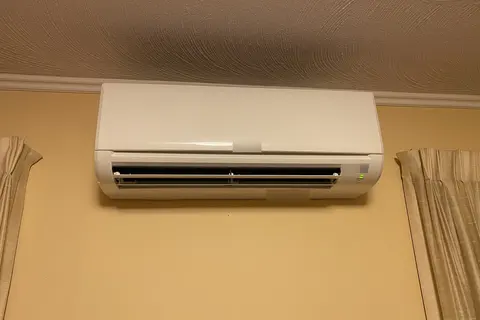
Ductless heat pump or keep the baseboard heaters?
- Ductless heat pump, baseboards stay
- West side electric homes with an open main living area
- Baseboards alone
- Small or lightly heated homes, or homes that lean on wood
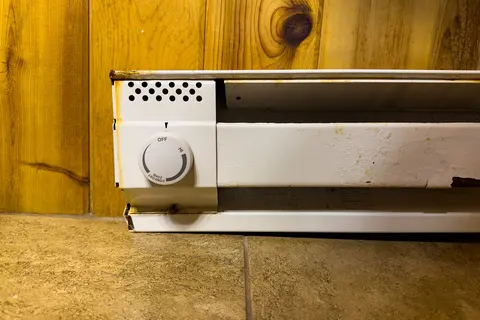
Should you insulate first or replace the equipment first?
- Insulate and seal first
- A working system in a house with a thin attic or leaks
- Equipment first
- A failed system, or a baseboard house already well insulated
Where this came from
- USFA: Heating fire safety, checked November 3, 2026.
- CPSC: Cautions on space heaters, furnaces and fireplaces, checked November 3, 2026.
- DOH: Carbon monoxide, checked November 3, 2026.
- BPA/Ecotope: Ductless heat pumps in forced-air homes, checked November 3, 2026.
- NEEA/Ecotope: Ductless heat pump field metering report, checked November 3, 2026.
- EIA: State residential energy prices, checked November 3, 2026.
- EIA: Electric Power Monthly Table 5.6.A, checked November 3, 2026.
- Seattle City Light: Rates, checked November 3, 2026.
- Tacoma Power: Heat pump rebates, checked November 3, 2026.
- PSE: Electric resistance to heat pump rebate (archived copy, May 2026), checked November 3, 2026.
- L&I: Verify a contractor, checked November 3, 2026.
- EPA: Section 608 technician certification, checked November 3, 2026.