Decisions Cooling East side
Evaporative cooler or AC for an east side house?
Evaporative cooler or Air conditioning
Compared by the people who run this site. Updated . Rebates and prices checked November 3, 2026.
An evaporative cooler versus AC is only a real question on the dry east side, since EPA says these coolers can't cool the air well in high humidity. Even there, AC is the steadier choice on humid days and in smoke. No Washington figure for a cooler's water use or savings could be found.
The verdict, by situation
If you're replacing nothing and adding cooling to an east side house with a furnace
AC or a heat pump first. It adds no water use or pad upkeep, and the comparison with a heat pump lets one job cover some of your heating too.
If you already have an evaporative cooler that works, and you live around Yakima or the Tri-Cities
Keep it for now, with a smoke plan. Replace it when it fails or when smoke days make it unusable, since EPA's advice is to cover its intake with a filter or use it sparingly.
If you're on the west side
AC, not an evaporative cooler. EPA says: "In high humidity, evaporative coolers cannot cool the air well." And we found no Washington evidence to set against that.
If your water is hard or metered and costly
Lean AC, or budget for pad upkeep. The University of Arizona's cooler upkeep advice treats heavy mineral deposits as a reason to replace pads, and water use is the part of this choice we can't size for Washington.
If you're in a dry rural area and smoke rarely reaches you
Either. That is the case for a cooler, but we can't show you savings numbers for it from any Washington source.
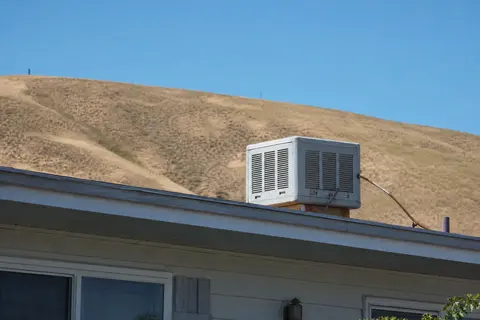
Side by side
| Compare | Evaporative cooler | Air conditioning |
|---|---|---|
| High humidity | EPA: "cannot cool the air well" | Not limited by that EPA line |
| Water use | Arizona figure: 150 gallons a day at 75% efficiency | None listed in the sources |
| Electricity | Arizona article: AC uses two to four times more | Same article, Tucson house, 2007 |
| Washington figures | None found for water or savings | Metered cooling for ductless only |
| Smoke | 4-inch MERV 13 on intakes if safely accessible, or use sparingly | Central: fan On, MERV 13. Window: damper |
| Upkeep | Pads, water, possible mineral build-up | Filter, clear outdoor unit |
| Technician | Ask who services pads and the water line | EPA-certified for refrigerant |
Sources: EPA: heat and smoke guide, EPA: wildfires and indoor air, CLIMAS, University of Arizona, Sept. 2007. The water and power figures are from Arizona in 2007, not Washington, so don't scale them to your house. The table can't show your summer humidity or your water rate.
What would change the answer
- Your area has more humid or stormy spells in summer than you expected: EPA's limit starts to bite.
- Your cooler is on a roof you can't reach safely: the smoke filter step in EPA's advice falls away, leaving "use sparingly".
- Your furnace is also due: a heat pump bid can cover cooling and heating in one job.
- Someone at home is sensitive to smoke: AC with a filter or a clean room moves up.
- Your summer water supply is limited: a cooler's daily use may rule it out.
- A Washington study of cooler water use or savings appears: we looked and found none.
What it costs, with dates
We found no official installed-price figure for an evaporative cooler or for AC, so this page prints neither. Ask for written bids that itemize the unit, roof or wall work, electrical, water line and drain, and permits.
We also found no Washington rebate for an evaporative cooler as of November 2026. Heat pump rebates may apply if your home has electric heat today, but Avista's Washington page (archived copy, June 2026) shows no heat pump amount, so confirm with the utility.
The one published comparison we can give you is from Arizona. CLIMAS, a University of Arizona program, wrote in 2007 that "Air conditioners generally use two to four times more electricity than swamp coolers", using a Tucson house, and that a swamp cooler at 75% efficiency averages 150 gallons a day. Treat those as a sign of the trade-off rather than a Washington estimate. Your electricity rate is on your bill, and the statewide residential average was 14.63 cents per kWh in August 2026.
Who does the work
Hire a contractor for both, and check them on L&I's verification tool before signing. AC involves refrigerant, which requires an EPA-certified technician. L&I says to buy an electrical permit before any electrical work starts, and the permit page explains who handles it. Ask your local building office what a cooler's water line or roof mount needs.
What you can do is limited: a breaker check and keeping the area around a ground-level unit clear. Stay off the roof. If a roof-mounted cooler needs pads changed, have someone equipped for it do that.
How dry and how hot does it need to be?
EPA gives no number. Its wording is only that these coolers can't cool the air well in high humidity, and we found no Washington humidity threshold. So this page won't give you a rule of thumb.
The heat itself is not in doubt. NOAA normals show July highs of 89.9F in Yakima with 40.2 days a year at 90F or above, and 92.5F in Pasco with 54.7 days. Records reach 113 in Yakima and 115 in Pasco, both in June 2021. See the east side overview for how this fits the wider heating and cooling picture.
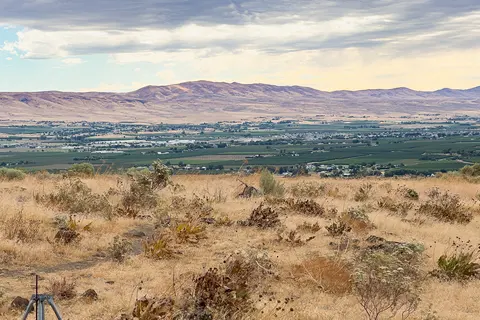
What happens to an evaporative cooler during wildfire smoke?
It needs a filter or less use. EPA says to cover the intakes with 4-inch MERV 13 filters if they are safely accessible, and otherwise to use the cooler sparingly.
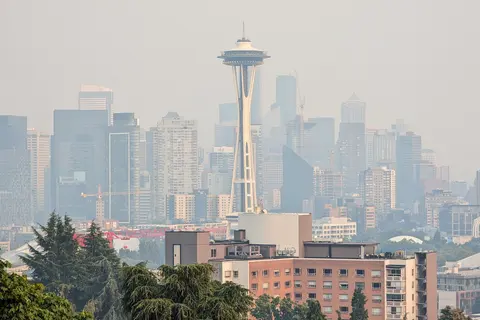
Those conditions can leave you with little cooling on a hot, smoky day. Plan for that in advance: a sized air cleaner for one room, and somewhere cooler to go. EPA says that heat and smoke together "may be much worse for your health than exposure to either of them alone."
Parts and examples
Minerals can build up on a cooler's pads, per the University of Arizona, and we have no figure on how much or how fast for Washington water. To learn what your water holds, Quality Water Treatment sells a hardness, iron and pH field test kit. The store shares an owner with this site. Check the cooler maker's manual before feeding it softened water: we found nothing that settles whether it helps.
What people ask next
Can I run an evaporative cooler with the windows closed?
We found no agency guidance on this. Follow the maker's manual on venting.
How much water does a swamp cooler use in Yakima?
We found no Washington figure. The only one available is Arizona's: 150 gallons a day at 75% efficiency, from 2007, and it shouldn't be assumed to carry over.
Will an evaporative cooler work in Spokane?
Possibly, but no Spokane figure was found. Spokane is cooler than Yakima or Pasco, with 20.8 days a year at 90F or above, and furnace or heat pump is the comparison we cover there.
Decide next
Your AC died: replace it, or install a heat pump instead?
- New central AC
- Houses with a sound furnace and no wish to change their heating
- Heat pump in its place
- Houses wanting cooling plus heat from one outdoor unit
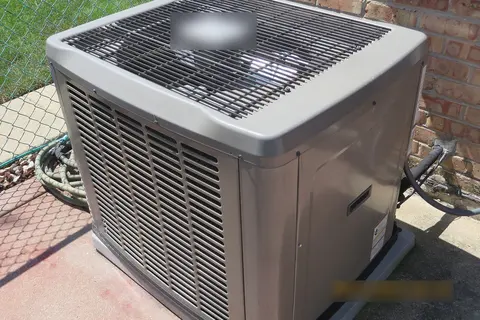
HEPA air cleaner or MERV 13 filter for wildfire smoke?
- HEPA room cleaner
- Homes without ducts, and one clean room in any home
- MERV 13 furnace filter
- Homes with ducted forced air and a slot that fits
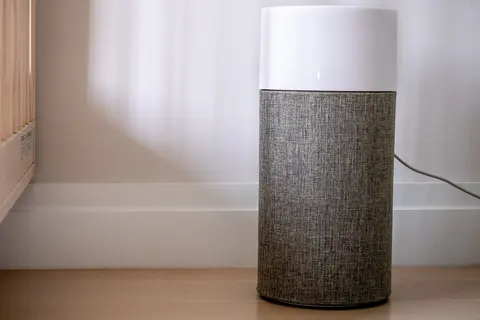
Windows open or closed when it's smoky and hot?
- Keep them closed
- Smoke outside, safe temperature inside
- Open when the air improves
- A clean break in the smoke, even a short one
- Go somewhere cooler
- Too hot to stay safe, or too much smoke indoors
Where this came from
- EPA: heat and smoke guide (PDF), checked November 3, 2026.
- EPA: wildfires and indoor air quality, checked November 3, 2026.
- EPA: Section 608 technician certification, checked November 3, 2026.
- CLIMAS, University of Arizona: cooling systems, Sept. 2007 (PDF), checked November 3, 2026.
- NOAA: 1991-2020 monthly normals, Yakima, checked November 3, 2026.
- NOAA: 1991-2020 annual normals, Yakima, checked November 3, 2026.
- NOAA: 1991-2020 monthly normals, Pasco, checked November 3, 2026.
- NOAA: 1991-2020 annual normals, Pasco, checked November 3, 2026.
- NOAA: 1991-2020 annual normals, Spokane, checked November 3, 2026.
- NWS: Yakima annual climate report, checked November 3, 2026.
- NWS: Pasco annual climate report, checked November 3, 2026.
- EIA: Electric Power Monthly Table 5.6.A, checked November 3, 2026.
- Avista: Washington single-family rebates (archived copy, June 2026), checked November 3, 2026.
- L&I: verify a contractor, checked November 3, 2026.
- L&I: electrical permits, fees and inspections, checked November 3, 2026.
- University of Arizona Cooperative Extension: water saving tips, checked November 4, 2026.