Decisions Damp, crawlspaces and ducts Both sides
Should you insulate first or replace the equipment first?
Insulate and seal first or Equipment first
Compared by the people who run this site. Updated . Rebates and prices checked November 3, 2026.
Whether to insulate first or replace equipment first turns on whether the system still runs: if it does, seal and insulate first, because new equipment can then be sized to a smaller load. If it has failed, or you heat with baseboards and the attic is already done, do the equipment first.
The verdict, by situation
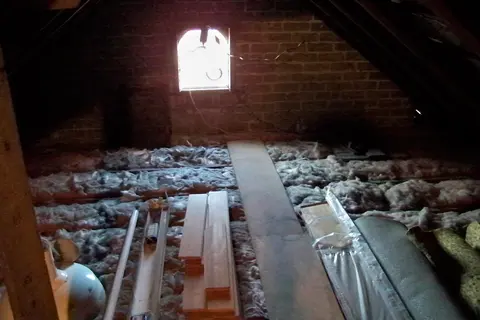
If the system still runs and the attic insulation is thin
Insulate and seal first. ENERGY STAR says air sealing and insulation can save up to 10% on annual bills, and sizing comes after.
If the furnace failed in January
Equipment first. Tell the contractor what insulation you plan, and ask for a Manual J that shows both cases.
If you heat with baseboards and the attic is already done
Equipment first. A 2008-09 metered pilot found Puget Sound homes saved 3,812 kWh a year with ductless, so compare the two.
If the system runs but some rooms never get comfortable
Air leaks and ducts first. ENERGY STAR says "Sometimes, these are the real sources of problems rather than your HVAC equipment."
If the air conditioner died in an east-side July
Equipment first. Dangerous summer heat can't wait, so read AC or heat pump and do the attic before the next summer.
If your income is low enough for a free program
Ask for weatherization before anything. Snohomish and Clark both point to free county programs, which may change the order for you.
Side by side
| Compare | Insulate and seal first | Equipment first |
|---|---|---|
| What it changes | How much heat the house needs | How that heat gets made |
| Official savings line | Up to 10% of annual bills (ENERGY STAR) | Ductless saved 3,812 kWh a year in Puget Sound (2008-09 pilot) |
| Effect on sizing | Lowers the load the next system is sized to | Sized to today's load unless you plan ahead |
| Rebates | Per square foot through utility contractors | Per unit, mostly for existing electric heat |
| Risk if skipped | Equipment may be larger than the house later needs | Bills stay higher until the work is done |
| Code | No order set for existing homes in the text checked | New work sized by Manual S on Manual J loads, or an approved method |
| Urgency | Can usually wait for a good contractor | No heat in winter can't wait |
Sources under the table: ENERGY STAR seal and insulate, NEEA field metering report, 2021 energy code. These savings figures are not comparable measures, one a share of bills and one metered kWh. A larger billing analysis of the same pilot found 1,677 kWh a year of space heating savings in Puget Sound. The table can't say which is larger in your house.
What would change the answer
- The attic rebate only exists at low starting R-values. If yours is above R19, PSE's archived attic lines stop applying (archived copy, April 2026), so confirm with the utility.
- Your equipment is old enough to prompt a review. ENERGY STAR's age prompts are more than 10 years for a heat pump or AC, and more than 15 for a furnace or boiler.
- A contractor can do both in one visit, through one utility network. Timing stops mattering much.
- Your ducts are the leak. Move duct sealing to the top of the list.
- You are planning to move gas appliances out. The new air tightness and the new equipment may then belong in one plan.
- A deadline applies, like Seattle's oil-to-heat-pump bonus. That can push equipment ahead.
What it costs, with dates
We found no official installed-price figure for insulation, air sealing or new equipment, so the dated numbers here are rebates. These are as of November 2026, and each needs the utility's contractors. Ask written bids to itemize square feet, starting and finished R-value, air sealing separately from insulation, and any bath fan or ventilation changes.
Insulation and air-sealing lines
| Utility | Attic or floor | Air sealing |
|---|---|---|
| PSE | Attic R11 or less to R49, $1.75 per sq ft up to $3,500; attic R12-R19 to R49, $0.50 per sq ft up to $1,000; floor $2.50 per sq ft up to $5,000 (archived copy, April 2026), confirm with the utility | Attic or floor $0.20 per sq ft up to $400 each (archived copy, April 2026), confirm with the utility |
| Snohomish PUD | Insulation $1 per sq ft, electrically heated homes | No separate line found |
| Clark Public Utilities | Floor and attic $0.75 per sq ft; wall $1.20 per sq ft, electric heat | Attic or crawl $100; whole house $300 |
Sources: PSE insulation rebates (archived copy, April 2026), Snohomish PUD, Clark. Avista lists a Home Insulation Program with no figure (archived copy, June 2026), so confirm with the utility. For fuel costs, see what heat costs.
Who does the work
Two trades usually handle this, and both can be checked on L&I's tool: an insulation or weatherization contractor, and an HVAC contractor. Rebates point you to each utility's list, so start there. Your own jobs are a look from the attic hatch, photos of what's there, a filter change, and a note of rooms that stay cold. If you burn gas or oil, ask how tightening the house affects those appliances.
Why does the order change the size of the new system?
Because sizing starts from how much heat the house loses. The federal consumer guide tells contractors to use Manual J and warns that oversizing can cost too much, give poor comfort and lead to mold.
Insulation and air sealing lower that load. If you do them after the new system goes in, the system may be larger than it needs to be. Washington's energy code also ties new equipment to Manual S and Manual J, or an approved method.
ENERGY STAR adds that improper installation can cut efficiency up to 30 percent, so the bid's sizing page deserves real reading. Your starting point is on the west side or east side page.
Is the old system safe to keep running while you insulate?
That depends on its yearly check and your CO alarm. Washington's health department wants oil and gas appliances checked yearly by a trained professional.
If a CO alarm goes off, get everyone out first, then call 911 from outside. Don't go back in to look for the cause.
Parts and examples
Sometimes the complaint is a room with a bad register, not a thin attic. Plumbing Supply and More, which shares an owner with this site, has a registers and grilles page that shows what a contractor might fit. It is useful for comparing, and it won't tell you whether a duct is the real cause.
What people ask next
Can I claim both an insulation rebate and a heat pump rebate?
We found no page that rules it out or promises it. Ask the utility in writing, since conditions differ. PSE's heat pump rule says to apply within 30 days of purchase (archived copy, May 2026), so confirm with the utility.
Is the attic the place to start in a Washington house?
We found no state ranking of attic, wall and floor. Clark's list rebates all three, so let a contractor's findings from your house decide. Rebate or wait covers the money side.
Decide next
Should you seal your ducts or replace them?
- Seal and insulate
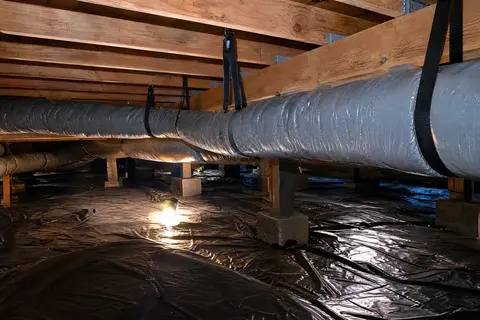
- Ducts that are whole but leak at joints and seams
- Replace the runs
- Torn, crushed or disconnected runs, or a new system that needs different ducts
Take a rebate now or wait for better money?
- Take what is open now
- Anyone with a failing system or a utility offer that fits
- Wait for HARP and HOMES
- A working system, income under 150% AMI, and no deadline

Should you repair your furnace or AC, or replace it?
- Repair it
- Younger equipment, one clear fault, sound ducts
- Replace it
- Older equipment, repeat faults, or rooms that never felt right
Where this came from
- ENERGY STAR: Seal and insulate, checked November 3, 2026.
- ENERGY STAR: Heating and cooling, checked November 3, 2026.
- ENERGY STAR: When to replace, checked November 3, 2026.
- U.S. DOE: Home heating and cooling guide, checked November 3, 2026.
- NEEA: Ductless heat pump field metering report, checked November 3, 2026.
- NEEA: Ductless heat pump billing analysis, checked November 3, 2026.
- State Building Code Council: 2021 residential energy code, checked November 3, 2026.
- Washington DOH: Carbon monoxide, checked November 3, 2026.
- PSE: Insulation rebates (archived copy, April 2026), checked November 3, 2026.
- PSE: Electric resistance to heat pump rebate (archived copy, May 2026), checked November 3, 2026.
- Avista: Single-family rebates (archived copy, June 2026), checked November 3, 2026.
- Snohomish County PUD: Weatherization rebates, checked November 3, 2026.
- Snohomish County PUD: Other assistance, checked November 3, 2026.
- Clark Public Utilities: Weatherization program, checked November 3, 2026.
- Clark Public Utilities: Limited income weatherization, checked November 3, 2026.
- L&I: Verify a contractor, checked November 3, 2026.