Decisions Your house Both sides
What are your choices in a house over a crawlspace?
Updated . Sources checked November 3, 2026.
A crawlspace house in Washington starts vented, since the state code default is vent openings plus a six-mil black polyethylene ground cover. So check the ground cover and the ducts before you pay to seal anything. Moisture, duct leaks and floor insulation are the three decisions that meet down there.
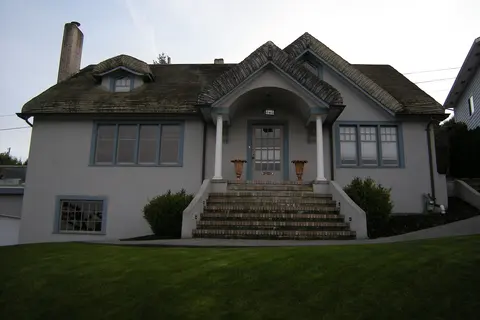
What to decide, in this order
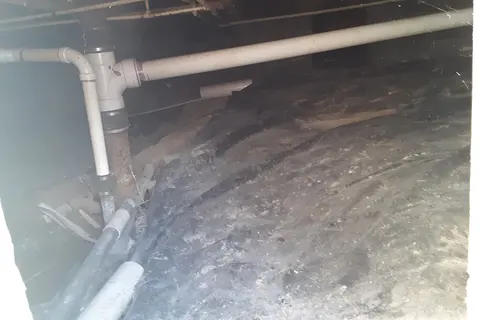
Should a Washington crawlspace stay vented or be sealed?
Sealing brings radon and exhaust rules with it, and the marine-climate evidence is mild.
- Stay vented, finish the ground cover
- Most existing houses with clear vents and no standing water
- Seal it (unvented)
- A designed project that meets the radon and exhaust rules
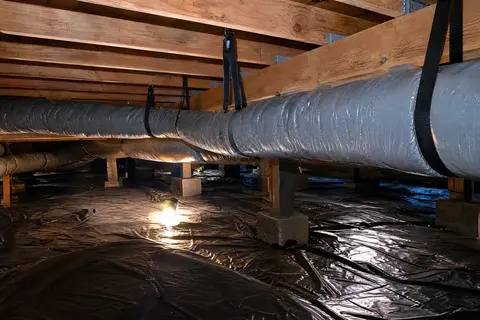
Should you seal your ducts or replace them?
Ducts under the floor are where ENERGY STAR says to look first.
- Seal and insulate
- Ducts that are whole but leak at joints and seams
- Replace the runs
- Torn, crushed or disconnected runs, or a new system that needs different ducts
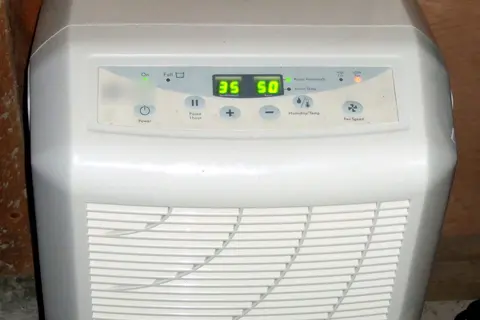
Dehumidifier or more ventilation for a damp Washington house?
Damp indoors may start below the floor, or may not.
- Dehumidifier
- A closed basement or room that stays above 60 percent
- More ventilation
- Steamy bathrooms and moisture made by daily living upstairs
Should you insulate first or replace the equipment first?
Floor insulation has its own rebates and changes the size of any new system.
- Insulate and seal first
- A working system in a house with a thin attic or leaks
- Equipment first
- A failed system, or a baseboard house already well insulated
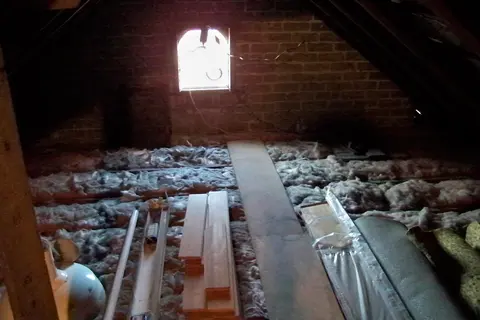
Ductless or ducted heat pump for this house?
Bad crawlspace ducts can tip this choice toward going without.
- Ductless
- No ducts, or ducts in poor shape, with baseboards to cover far rooms
- Ducted
- Sound ducts already reaching every room, often from an old furnace
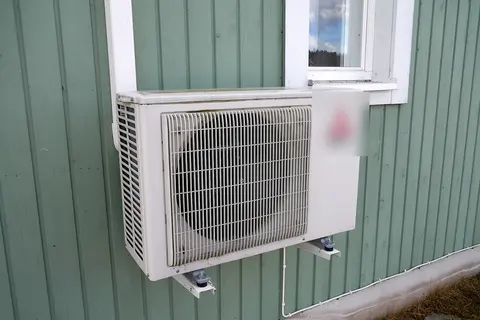
Take a rebate now or wait for better money?
Which utilities pay for floors, ducts and air sealing, and on what terms.
- Take what is open now
- Anyone with a failing system or a utility offer that fits
- Wait for HARP and HOMES
- A working system, income under 150% AMI, and no deadline
What does Washington's code ask of a crawlspace?
It asks for vents and ground cover unless you take on a longer list. The residential rule sets these out:
- Vented. One square foot of net vent area per 300 square feet of under-floor area, reducible to 1 per 1,500 with a Class I vapor retarder.
- Ground cover. Six-mil black polyethylene or equal, overlapped 6 inches, to the foundation wall.
- Fewer vents. Below 1/300, or with operable louvers, a radon vent is required.
- Unvented. A continuous sealed Class I retarder, 6 inches up the stem wall, a radon system and continuous exhaust at 1 cfm per 50 square feet.
Encapsulation is not a universal fix here. The savings in a DOE article, 15% to 18%,, rest on a humid-climate rationale. A Building America article by WSU authors says that in marine climates of the Northwest, "vented crawl spaces work acceptably most of the time."
Why do the ducts come first?
Because that is where leaks waste paid-for heat. ENERGY STAR says "about 20 to 30 percent of the air that moves through the duct system is lost due to leaks, holes, and poorly connected ducts." It names crawlspaces among the first places to focus, and leaky ducts can pull particles from crawl spaces. Pros use mastic or metal tape, and the advice is "never use duct tape." The state code wants at least R-8 on ducts 3 inches and larger outside conditioned space.
A look through the hatch is enough for you. Note torn plastic, standing water or sagging ducts, and take a photo. Leave any old wrap you are unsure of alone, and hand it to a professional. EPA says asbestos exposure generally comes when materials are disturbed.
How do you know whether the crawlspace is causing the damp?
Measure first, and fix the source. EPA says to keep indoor humidity below 60 percent, ideally 30 to 50, and to run a bath fan or open a window when showering. DOH says fixing the moisture comes first with mold, and to work out whether it is a leak or condensation.
Test for radon in the house, not in the crawlspace. DOH says to keep foundation vent-blocks unobstructed, and EPA says to fix at 4 pCi/L or higher and that its zone map should not decide whether a home gets tested.
Which rebates reach under the floor?
Several do, for houses that already qualify, as of November 2026. PSE listed floor insulation at $2.50 a square foot up to $5,000 and duct sealing and insulation up to $1,000 (archived copy, April 2026), so confirm with the utility. Clark Public Utilities lists floors at $0.75 a square foot and duct sealing at "$200 or $500" for electric heat. Snohomish PUD lists insulation at $1 a square foot and single-family duct sealing up to $450. We found no official installed-price figure, so get bids that price ground cover, duct work and insulation separately. See every utility in one table.
What people ask next
Should I block my crawlspace vents in winter?
The code sets vent area for a reason, and going below 1/300 or adding operable louvers triggers a radon vent. Talk to a contractor or your local building office before changing them.
Decide next
Should a Washington crawlspace stay vented or be sealed?
- Stay vented, finish the ground cover
- Most existing houses with clear vents and no standing water
- Seal it (unvented)
- A designed project that meets the radon and exhaust rules
Should you seal your ducts or replace them?
- Seal and insulate
- Ducts that are whole but leak at joints and seams
- Replace the runs
- Torn, crushed or disconnected runs, or a new system that needs different ducts
Dehumidifier or more ventilation for a damp Washington house?
- Dehumidifier
- A closed basement or room that stays above 60 percent
- More ventilation
- Steamy bathrooms and moisture made by daily living upstairs
Where this came from
- WAC 51-51-0408: under-floor space, checked November 3, 2026.
- WAC 51-11R-40320: duct insulation, checked November 3, 2026.
- DOE Building America: unvented, conditioned crawlspaces, checked November 3, 2026.
- Building America, WSU authors: crawl spaces, checked November 3, 2026.
- ENERGY STAR: duct sealing, checked November 3, 2026.
- ENERGY STAR: heating and cooling, checked November 3, 2026.
- ENERGY STAR: when to replace, checked November 3, 2026.
- EPA: learn about asbestos, checked November 3, 2026.
- EPA: a brief guide to mold, moisture and your home, checked November 3, 2026.
- Washington DOH: mold, checked November 3, 2026.
- Washington DOH: radon, checked November 3, 2026.
- EPA: map of radon zones, checked November 3, 2026.
- PSE: insulation rebates, archived copy April 2026, checked November 3, 2026.
- Clark Public Utilities: weatherization program, checked November 3, 2026.
- Snohomish PUD: weatherization rebates, checked November 3, 2026.