Decisions Your house Both sides
What are your choices in a house with no air conditioning?
Updated . Sources checked November 3, 2026.
A Washington house with no AC has company, since EIA's 2020 survey found only 53% of homes use air conditioning. The choice runs from a plan for one cool room to a whole-house heat pump. Make it before the heat comes, because 2021 showed how fast a house can become unsafe.

What to decide, in this order
Are fans enough, or does your Washington house need AC?
Where a fan stops helping, in each agency's own numbers.
- Fans
- Mild days when the indoor reading stays within the agency lines
- Air conditioning
- Any home planning for a heat wave, or for people at home all day

Should you cool one room or the whole house?
Cooling one room may be enough, and sometimes leaving is the right plan.
- One cool room
- West side homes, no ducts, a modest budget, a room you can close
- Whole-house cooling
- East side summers, existing ducts, people home through the heat
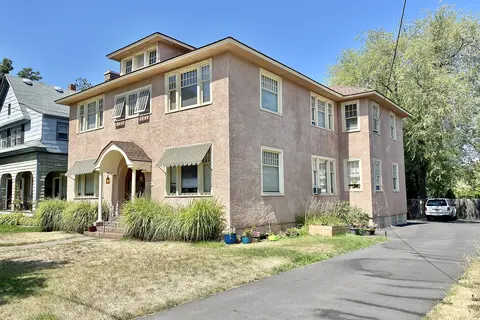
Portable AC or window AC for a Washington house?
The two plug-in choices, and how each behaves in smoke.
- Portable AC
- Windows that can't hold a unit, ideally with a two-hose model
- Window AC
- Sashes that can hold a unit, on a model whose damper closes
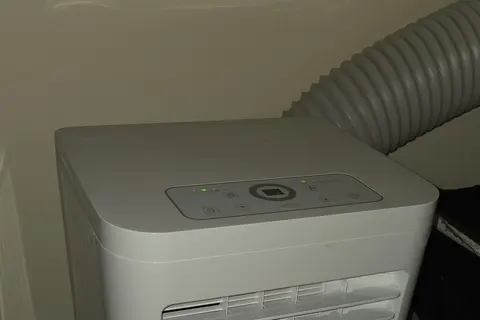
Window AC or a ductless heat pump for your house?
A summer fix or a unit that also heats.
- Window AC
- One or two rooms, a small budget, cooling only
- Ductless heat pump
- Electric heat you also want to cut, a long stay
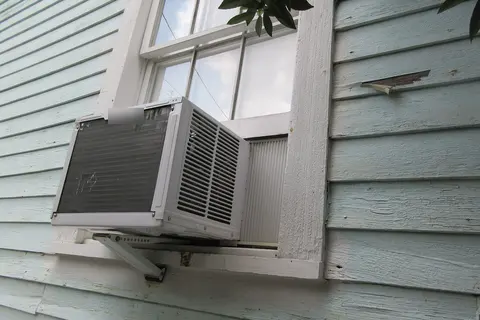
Your furnace is fine but you have no AC: AC or heat pump?
West side house with working heat, weighing a new outdoor unit.
- Central AC
- You want only summer cooling, and a bid shows a clear gap
- Heat pump, furnace stays
- You want cooling plus a second heat source for mild days

Your AC died: replace it, or install a heat pump instead?
East side readers replacing old cooling should start here.
- New central AC
- Houses with a sound furnace and no wish to change their heating
- Heat pump in its place
- Houses wanting cooling plus heat from one outdoor unit
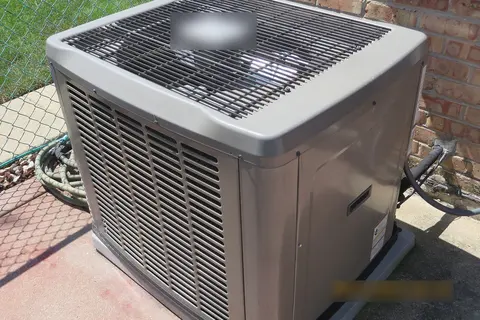
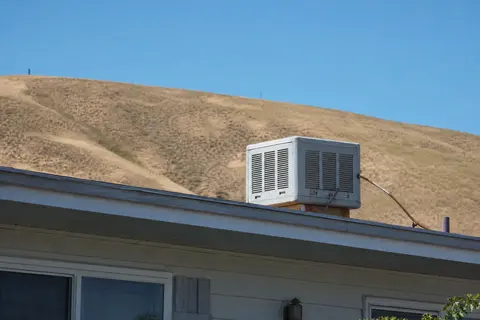
Evaporative cooler or AC for an east side house?
A dry-climate option that does not suit the west side.
- Evaporative cooler
- Dry east side house, ready for water use and pad upkeep
- Air conditioning
- Most houses, smoke-prone areas, west side, or where heat pump cooling fits
Windows open or closed when it's smoky and hot?
Smoke can take away the cheapest cooling you have.
- Keep them closed
- Smoke outside, safe temperature inside
- Open when the air improves
- A clean break in the smoke, even a short one
- Go somewhere cooler
- Too hot to stay safe, or too much smoke indoors

How hot does it actually get?
Hotter than the averages suggest. Sea-Tac's July high averages 77.4F in NOAA normals, yet it reached 108F on June 28, 2021. Spokane's record is 109F and Pasco's is 115F, both set that month.
The state reported 157 heat-related deaths from June 26 to August 31, 2021, and 1,232 excess deaths during the heat dome, including 826 beyond the COVID-19 and heat-related deaths reported around that time. Whether a house has cooling is a safety question as well as a comfort one.

What can you do this week, with no equipment?
Shade the windows, use the lowest floor and know where you would go. DOH says awnings or louvers can reduce heat entering by as much as 80 percent, and that people without AC should stay on the lowest floor out of the sun. To find a cooling center, dial 2-1-1.
Do not count on a fan alone. CDC says: "Use fans, but only if indoor temperatures are less than 90°F." EPA says separately not to use electric fans for cooling when the room is in the mid-90s or higher.
Know the signs of heat stroke, which NWS lists as including confusion, slurred speech, a body temperature above 103F and fainting. Call 911 or get the person to a hospital immediately.

What does smoke change about the choice?
It rules out some equipment on some days, so ask how each option handles it. EPA's wildfire guidance says not to use a window unit if you cannot close its outdoor damper, and to use a single-hose portable sparingly because it can bring more smoke in. EPA's smoke and heat guide adds that mini-split and window units typically lack filters for PM2.5, so plan on an air cleaner too.
What should you budget for?
We can give you rebates but no installed-price figure, since we found no official one. Plug-in units need a suitable window or vent, secure fitting per the manual, and a correct ENERGY STAR size for the room. A mini-split is contractor-installed, and any refrigerant or line-set work belongs to a certified technician. Never open a portable's refrigerant circuit. Utility rebates are almost all written for heating, so check the utility comparison if your house has electric heat, as of November 2026. The west side and east side hubs show how much cooling your climate asks for.
Decide next
Are fans enough, or does your Washington house need AC?
- Fans
- Mild days when the indoor reading stays within the agency lines
- Air conditioning
- Any home planning for a heat wave, or for people at home all day
Should you cool one room or the whole house?
- One cool room
- West side homes, no ducts, a modest budget, a room you can close
- Whole-house cooling
- East side summers, existing ducts, people home through the heat
Portable AC or window AC for a Washington house?
- Portable AC
- Windows that can't hold a unit, ideally with a two-hose model
- Window AC
- Sashes that can hold a unit, on a model whose damper closes
Where this came from
- EIA: RECS 2020 air conditioning by state, checked November 3, 2026.
- NOAA NCEI: monthly normals, Sea-Tac, checked November 3, 2026.
- NWS: NOWData, Seattle area, Sea-Tac daily data, checked November 3, 2026.
- NWS: Spokane annual climate report, checked November 3, 2026.
- NWS: Pasco annual climate report, checked November 3, 2026.
- NWS: heat illness, checked November 3, 2026.
- Washington DOH: excess deaths during the heat dome, checked November 3, 2026.
- Washington DOH: hot weather safety, checked November 3, 2026.
- CDC: heat and health, checked November 3, 2026.
- EPA: extreme heat and indoor air quality, checked November 3, 2026.
- EPA: wildfires and indoor air quality, checked November 3, 2026.
- EPA: heat and smoke guide, checked November 3, 2026.
- ENERGY STAR: room air conditioners, checked November 3, 2026.