Decisions Damp, crawlspaces and ducts Both sides
Dehumidifier or more ventilation for a damp Washington house?
Dehumidifier or More ventilation
Compared by the people who run this site. Updated . Rebates and prices checked November 3, 2026.
Whether you need a dehumidifier or more ventilation depends on where the damp sits: a closed room or basement that stays humid suits a dehumidifier, and moisture from showers suits a fan. Buy a humidity meter first. If water is getting in, fix that before buying either one.
The verdict, by situation
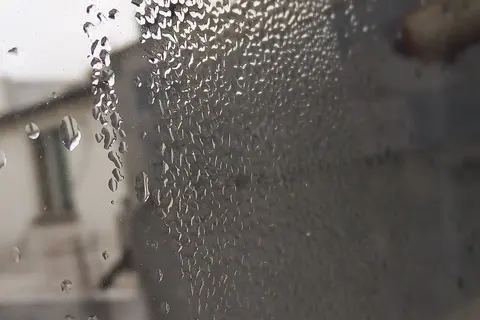
If the bathroom stays steamy and the upstairs windows bead on cold mornings
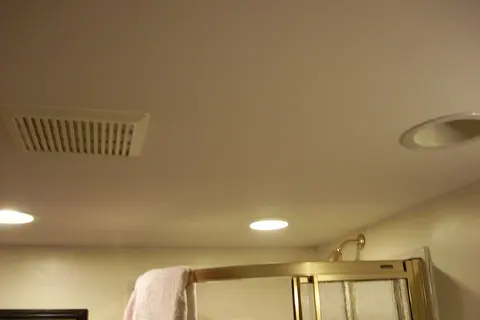
More ventilation first. EPA's first step for shower moisture is to run the bath fan or open a window, and that costs little to try for a week.
If a closed basement reads above 60 percent on a meter for days at a time
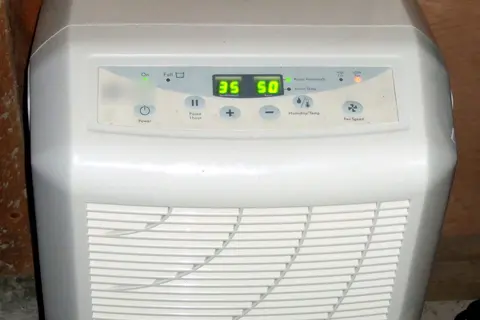
Dehumidifier. ENERGY STAR describes these machines working with doors and windows closed, which fits a room you can shut.
If you can see a drip, a stain that grows, or wet ground under the house
Neither yet. Find the water. Washington's health department starts with fixing the moisture, and no machine fixes a leak.
If the room is an unheated basement that stays under 65F
Low-temperature model. ENERGY STAR warns that frost can form below 65F on standard units.
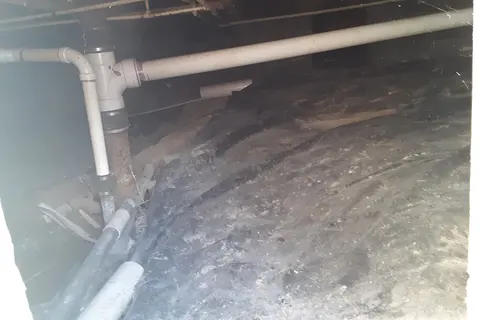
If the damp smell seems to come from a crawl space below
Look at the crawl first. Read vented or sealed crawl spaces before buying equipment for the rooms above it.
If it is smoke season and open windows were your plan
Close up and use the dehumidifier. EPA's smoke advice is to keep outdoor air out, then open up when the air improves.
Side by side
| Compare | Dehumidifier | More ventilation |
|---|---|---|
| What it does | Takes water out of room air | Moves damp indoor air outside |
| Doors and windows | Closed, per ENERGY STAR | Fan running or window open while showering, per EPA |
| Cold rooms | Frost can form below 65F; low-temperature models exist | No cold-room limit found in the pages checked |
| Efficiency marker | ENERGY STAR models use 20% less energy | Code sets fan efficacy: under 90 cfm exhaust fans 2.8 cfm per watt |
| Code | No Washington requirement found | Energy code R403.6 calls for mechanical ventilation per IRC M1505 or IMC |
| Smoke days | Can run with the house closed | Outdoor air is the problem until the air improves |
| Who owns one | 6% of Washington homes use one (EIA, 2020) | No state share found |
Sources under the table: EPA mold guide, ENERGY STAR dehumidifiers, 2021 Washington residential energy code, EIA housing survey. The table can't show your house. A $10 meter reading tells you more than any row here.
What would change the answer
- Your meter stays between 30 and 50 percent. Then the air is fine, and a wet spot points to a leak or a cold surface.
- A new, oversized air conditioner arrived just before the damp did. ENERGY STAR says an oversized room unit leaves a room damp and clammy, and a federal consumer guide links oversizing to mold.
- The basement warms up in summer. A standard dehumidifier may suit it then, even if it frosted in January.
- The bath fan turns out to be broken or missing. Replacing it comes before anything else upstairs.
- Mold keeps returning after the humidity drops. That pushes the search back toward a leak.
What it costs, with dates
Start with the small number: EPA puts a humidity meter at $10 to $50. We found no official installed-price figure for a bath fan, a ventilation system or a ducted dehumidifier, so get written bids. Ask each bid to itemize the fan or unit, the duct run to outdoors, wiring, permits and any testing of air flow.
Running a portable unit is simple arithmetic. Take the watts on the label, multiply by hours run, divide by 1,000, then multiply by your rate. Washington's residential average was 14.63 cents per kWh in August 2026, as of November 2026; your utility will differ.
We found no utility rebate for a dehumidifier or a bath fan. Washington's federal-funded rebates list ventilation but had not launched as of November 2026, as the rebate or wait page explains.
Who does the work
Ventilation work belongs to a registered contractor, and an electrician for any new wiring. Check either one on L&I's verify tool. L&I says a permit comes before any electrical work. In unincorporated King County, spot fans are on the mechanical permit exempt list, though other permits may apply. Your own part is small: read the meter, run the fan, keep the dehumidifier's filter and space clear, and check the breaker if a unit goes dead.
What humidity number should you aim for?
Keep it below 60 percent, and ideally between 30 and 50, according to EPA. Put the meter in the room that worries you and read it at different times for a week.
One reading after a shower proves little. Days above 60 percent in a closed room are the signal that a dehumidifier has work to do.
When does a dehumidifier stop working well?
A cold room is the usual limit. ENERGY STAR says frost can form below 65F and suggests considering a low-temperature model.
That limit is easy to reach here. Sea-Tac's normal January high is 48F, and Spokane's is 34.5F. An unheated basement on either side of the Cascades may sit under 65F for months. Put a thermometer down there before you pick a model. The crawl space starting page covers homes where the damp begins lower down.
Should a damp house get a heat recovery ventilator?
It is a fair question for a contractor, but this page can't settle it. Washington's code requires mechanical ventilation and sets a fan efficacy of 1.2 cfm per watt for heat recovery, energy recovery and other balanced systems.
We could not open a primary source comparing heat recovery and energy recovery machines, so we do not compare them. The same code section calls for tested air flows and a written report on code-covered work, and that report is a fair thing to ask for. For the wider picture, go back to the site's starting page.
Parts and examples
For a look at what a contractor might install, Plumbing Supply and More, which shares an owner with this site, has an indoor air quality category. Use it to compare product types and to ask better questions of a bid. Fan wiring stays with the electrician.
What people ask next
Should I block my foundation vents to keep the basement drier?
Not on your own. Washington's health department says to keep foundation vent-blocks unobstructed, for radon reasons.
Does a leak and a wet window call for the same fix?
No. Washington's mold guidance separates leaks from condensation, so work out which you have before spending money.
Can I open windows to dry the house during wildfire smoke?
Wait. EPA says to open windows or intakes and run exhaust fans when the air improves, even temporarily. Our smoke and heat page has the rest.
Decide next
Should a Washington crawlspace stay vented or be sealed?
- Stay vented, finish the ground cover
- Most existing houses with clear vents and no standing water
- Seal it (unvented)
- A designed project that meets the radon and exhaust rules
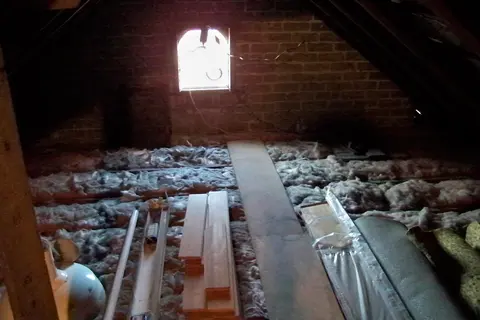
Should you insulate first or replace the equipment first?
- Insulate and seal first
- A working system in a house with a thin attic or leaks
- Equipment first
- A failed system, or a baseboard house already well insulated
Windows open or closed when it's smoky and hot?
- Keep them closed
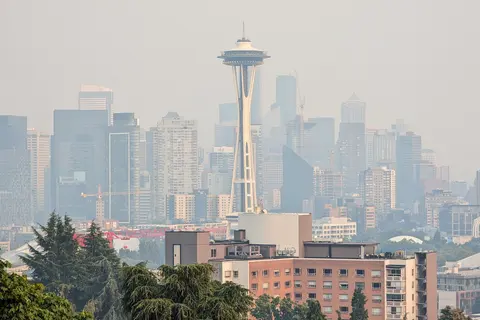
- Smoke outside, safe temperature inside
- Open when the air improves
- A clean break in the smoke, even a short one
- Go somewhere cooler
- Too hot to stay safe, or too much smoke indoors
Where this came from
- EPA: A Brief Guide to Mold, Moisture and Your Home, checked November 3, 2026.
- Washington DOH: Mold, checked November 3, 2026.
- Washington DOH: Radon, checked November 3, 2026.
- ENERGY STAR: Dehumidifiers, checked November 3, 2026.
- ENERGY STAR: Room air conditioners, checked November 3, 2026.
- U.S. DOE: Home heating and cooling guide, checked November 3, 2026.
- State Building Code Council: 2021 residential energy code, checked November 3, 2026.
- EIA: Air conditioning in Washington homes, 2020, checked November 3, 2026.
- EIA: Electric Power Monthly, Table 5.6.A, checked November 3, 2026.
- Washington Commerce: IRA Home Energy Rebates, checked November 3, 2026.
- EPA: Wildfires and indoor air quality, checked November 3, 2026.
- NOAA: Sea-Tac monthly normals, 1991-2020, checked November 3, 2026.
- NOAA: Spokane monthly normals, 1991-2020, checked November 3, 2026.
- L&I: Verify a contractor, checked November 3, 2026.
- L&I: Electrical permits, fees and inspections, checked November 3, 2026.
- King County: Residential mechanical permits, checked November 3, 2026.