Decisions Cooling Both sides
Are fans enough, or does your Washington house need AC?
Fans or Air conditioning
Compared by the people who run this site. Updated . Rebates and prices checked November 3, 2026.
Whether fans are enough or you need AC is really a question of how hot the room gets, because a fan moves air and doesn't cool it. On milder days a fan can do. For a heat wave, plan on air conditioning for at least one room, or a cooler place to go.
The verdict, by situation
If you have no AC and are deciding before next summer
Plan on AC for at least one room. Ready.gov says: "Do not rely on a fan as your primary cooling device."
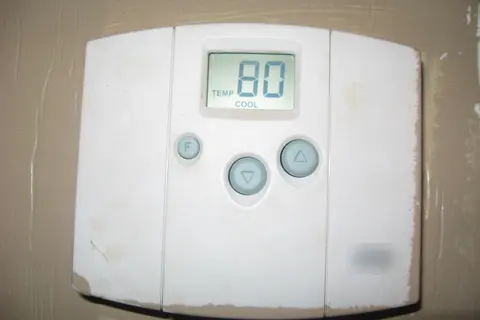
If your indoor thermometer reads less than 90°F
A fan fits CDC's wording. CDC: "Use fans, but only if indoor temperatures are less than 90°F."
If your indoor thermometer reads above 90°F
Not a fan, by CDC's wording. CDC adds: "In temperatures above 90°F, a fan can increase body temperature." Get to a cooler place.
If the room has reached the mid-90s or higher
Stop counting on the fan. EPA: "When it is that hot, electric fans will not prevent heat-related illness."
If someone is confused, slurring words or has fainted
Call 911. The National Weather Service lists these among the signs of heat stroke: "Call 911 or get the victim to a hospital immediately."
If you live around Yakima or Pasco
AC. NOAA normals show 40.2 days a year at 90F or more in Yakima and 54.7 in Pasco.

Side by side
| Compare | Fan | Air conditioning |
|---|---|---|
| Cools the air | No: EPA says portable fans "do not cool air" | Yes |
| CDC line | Only if indoor temperatures are less than 90°F | No fan limit applies |
| EPA line | Not for cooling when the room is in the mid-90s or higher | No fan limit applies |
| NWS line | "may actually make them hotter if heat index temperatures are above the 90s" | No fan limit applies |
| WA homes using it | Ceiling fans: 44% | AC: 53% |
| Sizing | None | By room or by load calculation |
| In a power cut | Stops | Stops |
Sources: CDC: heat and health, EPA: extreme heat and indoor air, NWS: heat illness, EIA: RECS 2020. Each agency words its limit differently and measures a different thing, so we print each as written and don't average them. Washington DOH's hot-weather page gives no fan temperature. The table can't show how your rooms hold heat.
What would change the answer
- Anyone at home gets dizzy, nauseated or develops a headache: DOH says to move somewhere cooler, rest and slowly drink a cool beverage, and to seek medical attention immediately if you don't feel better.
- Your upstairs reads far hotter than your ground floor: DOH points people without AC to the lowest floor, out of the sun.
- You can't fit or power any AC: then the plan becomes a cooling center, found by dialing 2-1-1.
- Smoke arrives with the heat: open-window fan cooling stops being simple, as windows open or closed explains.
- Your west side house has sun-struck windows you can shade: DOH says awnings or louvers can cut heat entering by as much as 80 percent.
What it costs, with dates
We won't put a running-cost number on a fan or a room unit without your label. We found no official installed-price figure for AC, and no agency running-cost figure for fans. Read the watts on the label, divide by 1,000, then multiply by your hours and your rate.
Washington's residential average was 14.63 cents per kWh in August 2026, up from 13.65 a year earlier. Your utility's rate will differ. As of November 2026 we found no rebate for a fan or a cooling-only room unit.
For anything a contractor installs, get written bids itemizing equipment, electrical work and permits. If that work includes heat, rebate or wait covers what's available.
Who does the work
Fans are yours alone. So is the thermometer: put one in the room where you spend the hottest hours, because the agency lines depend on how hot it actually is.
A portable needs no installer. A window unit must be secured exactly as its manual says; if the sash or sill is doubtful, have someone qualified fit it or choose a portable. Anything with an outdoor unit or new wiring goes to a contractor. Check them on L&I's tool and read who pulls the permit first. If a room unit stops, checking the breaker is as far as it goes for you.
What did the 2021 heat dome show about going without AC?
It showed that Washington, even the west side, can reach deadly heat. Sea-Tac hit 108F on June 28, 2021, after 102 and 104 on the two days before. Pasco reached 115 on June 27.
Washington DOH later reported 157 heat-related deaths between June 26 and August 31, 2021. The same report counted 1,232 excess deaths during the heat dome, which is 826 more than the COVID-19 (249) and heat-related (157) deaths reported around that time. Excess deaths are a different measure from a heat-death count, so the two figures shouldn't be read as one number.
Those are the reasons we don't treat a fan as the plan, even in a place with only 3.8 days a year at 90F or above, as at Sea-Tac.
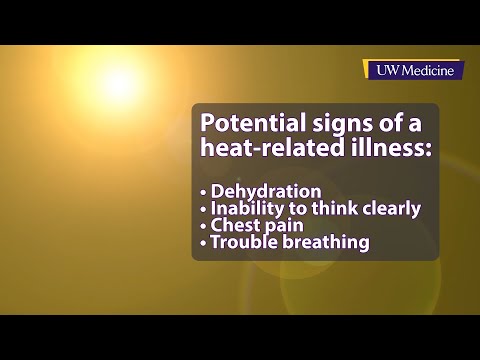
What are the signs that heat has become an emergency?
Confusion, slurred speech or fainting mean call 911. The National Weather Service list for heat stroke is:
- throbbing headache, confusion, slurred speech, nausea or dizziness
- body temperature above 103F
- hot, red, dry or damp skin, with a rapid, strong pulse
- fainting or loss of consciousness
NWS also says not to give fluids to someone with heat stroke. For heat exhaustion, it says to seek help if the person is vomiting, or symptoms worsen or last longer than 1 hour.
What should you buy first if you have no cooling at all?
Start with one room that you can keep cool, not a new fan. A room unit sized by ENERGY STAR's method is the smallest step, and portable or window AC covers the choice. If you are considering more, read one cool room or the whole house.
Fans still earn a place. EIA finds ceiling fans in 44% of Washington homes, and on a milder evening one can be all you need. The overviews for the west side and the east side put this in context.
What people ask next
Should I run a fan in the window at night during a Washington heat wave?
EPA's window rule is simple: if air outside is cooler than inside, open; if hotter, close. Check for smoke first, since the coolest time of day can be the smokiest.
Does the DOH give its own temperature limit for fans?
Not on its hot-weather page. That page gives no fan temperature, so use the CDC or EPA line as each one wrote it.
Where do I go if I can't cool my house at all?
Dial 2-1-1 for cooling centers in Washington. Go before anyone shows symptoms.
Decide next
Should you cool one room or the whole house?
- One cool room
- West side homes, no ducts, a modest budget, a room you can close
- Whole-house cooling
- East side summers, existing ducts, people home through the heat
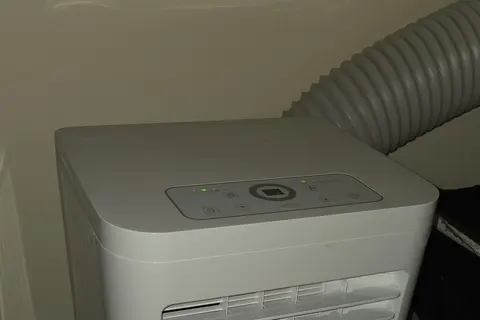
Portable AC or window AC for a Washington house?
- Portable AC
- Windows that can't hold a unit, ideally with a two-hose model
- Window AC
- Sashes that can hold a unit, on a model whose damper closes
Windows open or closed when it's smoky and hot?
- Keep them closed
- Smoke outside, safe temperature inside
- Open when the air improves
- A clean break in the smoke, even a short one
- Go somewhere cooler
- Too hot to stay safe, or too much smoke indoors

Where this came from
- CDC: heat and health, checked November 3, 2026.
- EPA: extreme heat and indoor air quality, checked November 3, 2026.
- EPA: heat and smoke guide (PDF), checked November 3, 2026.
- NWS: heat illness, checked November 3, 2026.
- Ready.gov: extreme heat, checked November 3, 2026.
- Washington DOH: hot weather safety, checked November 3, 2026.
- Washington DOH: extreme heat, checked November 3, 2026.
- Washington DOH: excess deaths report (PDF), checked November 3, 2026.
- EIA: RECS 2020, air conditioning by state (PDF), checked November 3, 2026.
- EIA: Electric Power Monthly Table 5.6.A, checked November 3, 2026.
- NOAA: 1991-2020 normals, Sea-Tac, checked November 3, 2026.
- NOAA: 1991-2020 normals, Yakima, checked November 3, 2026.
- NOAA: 1991-2020 normals, Pasco, checked November 3, 2026.
- NWS: Seattle climate data (NOWData), Sea-Tac daily highs, checked November 3, 2026.
- NWS: Pasco annual climate report, checked November 3, 2026.
- ENERGY STAR: room air conditioners, checked November 3, 2026.
- L&I: verify a contractor, checked November 3, 2026.