Decisions Heat, west side West side
Ductless or ducted heat pump for this house?
Ductless or Ducted
Compared by the people who run this site. Updated . Rebates and prices checked November 3, 2026.
Choosing ductless or ducted comes down to the ducts you already have. If sound ducts reach every room, a ducted heat pump usually fits. If there are no ducts, or they are in bad shape, ductless is the usual route. Your utility's rebate may tip a close call.
The verdict, by situation
If your house has baseboards and no ductwork
Choose ductless. The NEEA pilot metered this setup, with a unit in the main zone and the electric heat kept. See baseboards or ductless.
If you have an electric furnace and tight ducts
Choose ducted. BPA found a ductless unit doesn't heat back rooms as effectively as a ducted system. Details are on electric furnace or heat pump.
If you have ducts in a crawlspace that have never been checked
Get them tested before you pick. ENERGY STAR says about 20 to 30 percent of the air moving through a duct system is lost to leaks, holes and poor connections. Read seal or replace the ducts.
If wildfire smoke is a main worry
Lean ducted, if the ducts are sound. EPA says a central system can run a MERV 13 filter with the fan On, while mini-splits usually lack PM2.5 filters.
If you're on Snohomish PUD
Ask before assuming ductless pays. Its rebate page shows ducted amounts and no ductless amount.
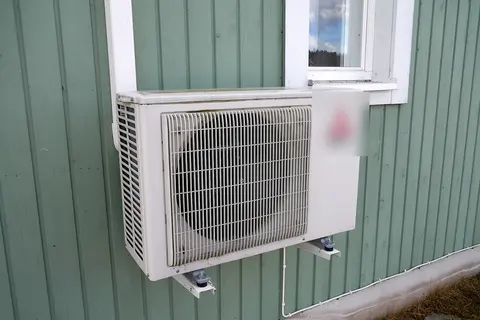
Side by side
| Compare | Ductless | Ducted |
|---|---|---|
| Needs ducts | No | Yes, and they must be sound |
| Back rooms | Reached less well; baseboards stay | Reached through existing registers |
| Duct losses | None | ENERGY STAR: about 20 to 30 percent lost in leaky systems |
| Smoke filtering | Add a room air cleaner | MERV 13 if fan and slot allow, fan On |
| Metered Northwest evidence | COP 3.05, Puget Sound, 2008-09 | No matching metered figure found |
| Federal minimum, split system | 14.3 SEER2, 7.5 HSPF2 | Same |
| Seattle noise review | None unless there is a complaint | Review for side-yard equipment |
Sources: NEEA field metering, 10 CFR 430.32, Seattle SDCI. The table can't say which uses less power in your house: we found no Washington field study comparing the two in the same kind of home.
What would change the answer
- A duct test comes back bad and the ducts can't be reached. Sealing may not be practical, which favors ductless.
- A bid says the ducts need major changes. Set that line against a ductless bid for the same rooms.
- The old ducts may have suspect wrap. EPA says asbestos exposure generally comes when material is disturbed, so have a professional look before any work.
- Your rebate differs a lot. Tacoma's $2,000 variable-speed line applies only when replacing an electric forced-air furnace.
- You have gas heat with central ducts. See gas furnace or heat pump, since most electric-heat rebates exclude you.
- You want only the main room comfortable. One head may be all you need, as one head or several explains.
What it costs, with dates
Rebates split sharply by utility, and all figures here are as of November 2026. We found no official installed-price figure for either type, so compare written bids that break out ductwork repairs, testing, electrical work, equipment and permits.
What three utilities pay
| Utility | Ductless | Ducted |
|---|---|---|
| Snohomish PUD | No amount on the page | $1,800 conversion; $2,500 inverter-driven |
| Clark Public Utilities | $900 | $1,000 from electric furnace; $1,250 variable speed; $500 zonal or heat pump to variable speed |
| Tacoma Power | $1,000 listed for up to 4 units | $1,000 air-source; $2,000 variable speed replacing an electric furnace |
All three require electric heat now, or list lower or different lines for other homes, and all require network or registered contractors. Other utilities are on the your utility page, and the West side list sorts decisions by house type.
Who does the work
The same trade usually bids both, so ask one firm to price both ways and show its Manual J numbers, which ENERGY STAR and DOE both point to. Verify registration with L&I. Seattle's refrigeration permit covers any split system, ducted or ductless. Unincorporated King County's permit list exempts single-family duct replacement, though other permits may apply. At home, you change the filters, keep the outdoor unit clear, and leave refrigerant and wiring to licensed people.
Are old ducts worth keeping?
Often, if a test says so. ENERGY STAR says sealing and insulating can improve efficiency by as much as 20 percent, and it says to start with ducts in attics, crawlspaces, unheated basements and garages.
Washington's code asks for at least R-8 on ducts 3 inches and larger outside conditioned space. That's a useful yardstick when you read a bid. Sealing should use mastic or metal tape, and ENERGY STAR says never to use duct tape.

Does ductless avoid every downside of ducts?
It avoids duct leakage, not the other trade-offs. Ductless heat is uneven between rooms, as BPA's study found, and many occupants added a 120-volt heater in a back room.
Ducted systems move air to every register but lose some on the way. So a sound, tested duct system and a single well-placed head fail in different ways, and your floor plan decides which failure you can live with.

What people ask next
Can a house have a ducted system and a ductless head together?
We found no source that rules on it, so ask for it in the bid. Check rebates first: Tacoma Power lists existing heat pump and existing ductless homes on separate lines.
Do ductless heads need a filter change for smoke?
A head's own filter isn't the answer to smoke. EPA says mini-splits usually lack filters for PM2.5, so plan on a room air cleaner: compare HEPA and MERV 13.
Does Seattle treat a ducted heat pump differently from a furnace permit?
Yes. Seattle's guide says a split system heat pump needs a refrigeration permit, and only licensed refrigeration contractors can get it, while a homeowner may get a furnace or mechanical permit.
Decide next
Replace the electric furnace, or put a heat pump on the ducts?
- Ducted heat pump
- Sound ducts and a furnace near the end of its life
- Ductless, furnace stays
- Furnace still works and the main room is the priority
- New electric furnace
- Only when a heat pump truly can't fit the house
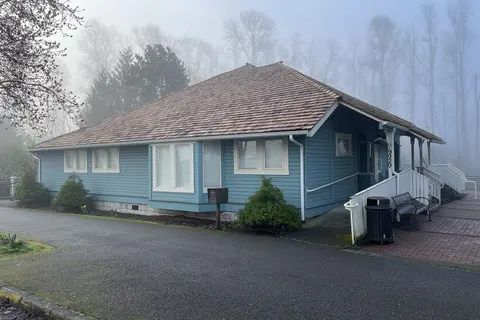
Should you seal your ducts or replace them?
- Seal and insulate
- Ducts that are whole but leak at joints and seams
- Replace the runs
- Torn, crushed or disconnected runs, or a new system that needs different ducts
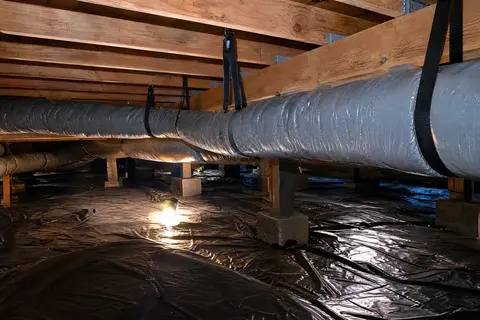
One ductless head or one in each problem room?
- One head
- Open plan, short hallway, and baseboards kept for the far rooms
- Several heads
- Closed-off rooms that stay cold or that you heat with plugged-in heaters
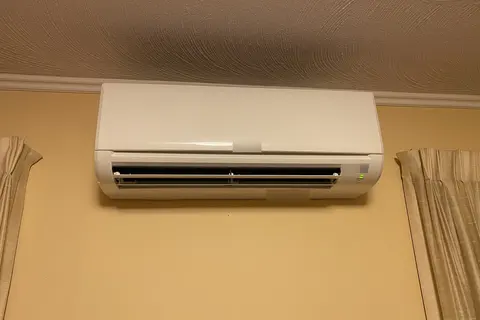
Where this came from
- NEEA/Ecotope: Ductless heat pump field metering report, checked November 3, 2026.
- BPA/Ecotope: Ductless heat pumps in forced-air homes, checked November 3, 2026.
- ENERGY STAR: Duct sealing, checked November 3, 2026.
- ENERGY STAR: Heating and cooling, checked November 3, 2026.
- ENERGY STAR: Ductless heating and cooling, checked November 3, 2026.
- DOE: Home heating and cooling consumer guide, checked November 3, 2026.
- EPA: Wildfires and indoor air quality, checked November 3, 2026.
- EPA: Heat and smoke guidance, checked November 3, 2026.
- EPA: Learn about asbestos, checked November 3, 2026.
- Cornell LII: 10 CFR 430.32, checked November 3, 2026.
- WAC 51-11R-40320: Duct insulation, checked November 3, 2026.
- Snohomish PUD: Heating rebates, checked November 3, 2026.
- Clark Public Utilities: Heat pump program, checked November 3, 2026.
- Clark Public Utilities: Ductless heat pump program, checked November 3, 2026.
- Tacoma Power: Heat pump rebates, checked November 3, 2026.
- L&I: Verify a contractor, checked November 3, 2026.
- Seattle SDCI: Furnace and heat pump permit guide, checked November 3, 2026.
- King County: Residential mechanical permits, checked November 3, 2026.